Two telescopes are back; the third is not
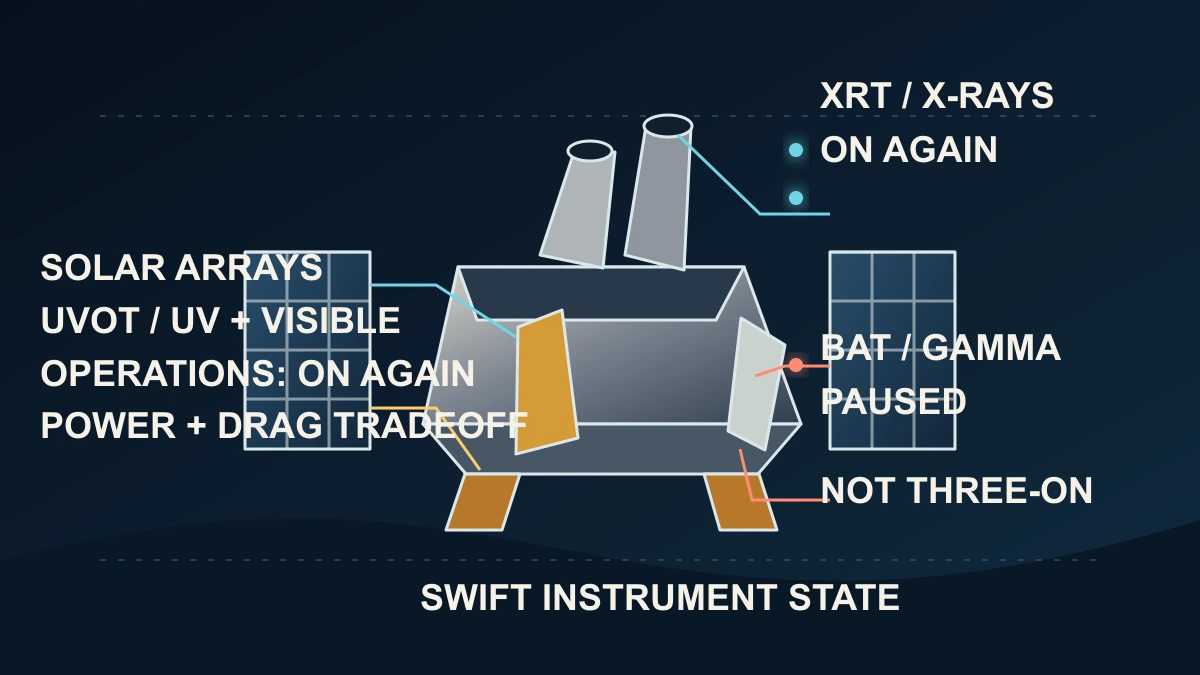
The short answer is that NASA did not wait for a successful orbit boost to restart every instrument. On Aug. 26, the Swift team turned on the Ultraviolet/Optical Telescope, or UVOT, and the X-ray Telescope, or XRT. Those instruments can now resume their planned kinds of ultraviolet, visible-light and X-ray observations while the observatory remains in its sinking low Earth orbit. The Burst Alert Telescope, or BAT, is a different case: NASA says its use was halted in April to reduce power consumption and allow the solar panels to be positioned in a way that further reduced drag. The team was still working toward returning BAT to data collection in the next few weeks.
That split matters because Swift is not one camera with one switch. NASA describes BAT as the wide-field instrument that detects and localizes gamma-ray bursts, then helps the spacecraft point XRT and UVOT at the afterglow. XRT measures X-ray light curves and spectra; UVOT captures ultraviolet and visible properties. The established result is therefore a partial science restart, not a three-instrument reset. The new evidence is the first current report of UVOT and XRT operating again after the boost plan was scaled back. The uncertain part is how long the renewed window will last and whether BAT returns on the team's expected schedule. Nothing here proves a completed capture, a full instrument recovery or a longer mission lifetime.
Low orbit turns atmosphere into a mission clock
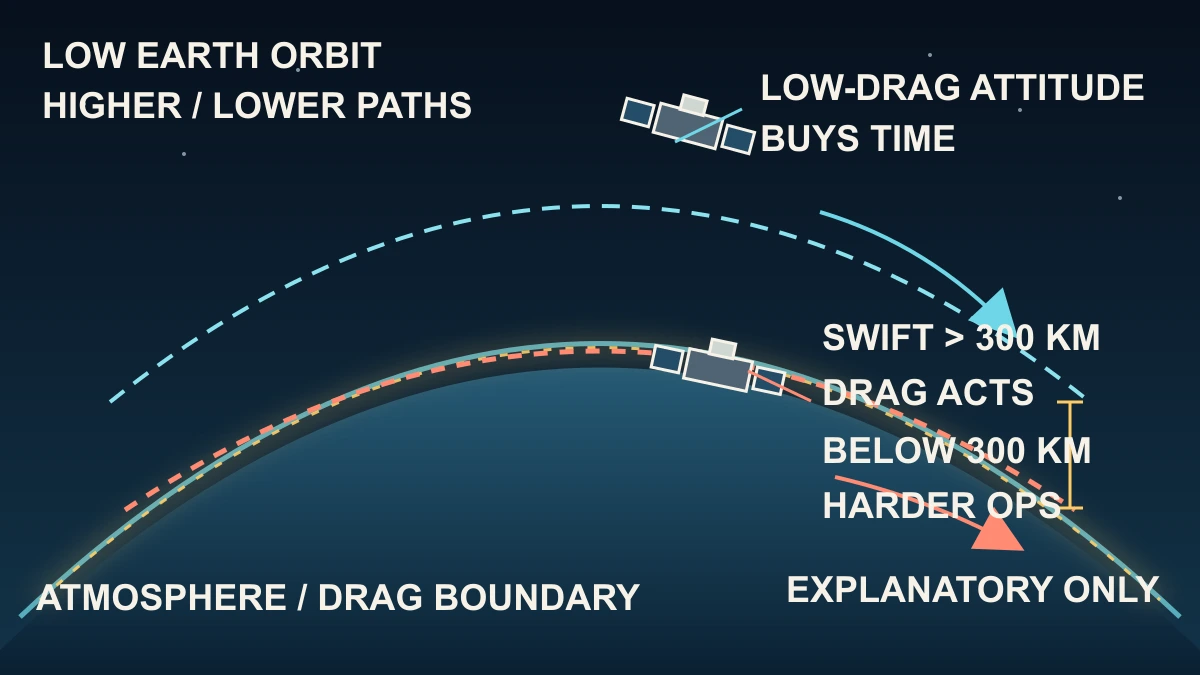
Swift is low enough for the thin upper atmosphere to matter. NASA explains that spacecraft in low Earth orbit experience drag; when a spacecraft lacks propulsion to counter it, the drag gradually reduces its altitude. Solar activity can magnify the effect by changing the upper atmosphere. NASA's altitude-prediction work says the forecast evolves with space weather, Swift's current height and its orientation, so the team changed how it operated the observatory to reduce drag and buy time for the servicing effort.
The 300-kilometre figure is best read as an operational boundary, not a magic line that switches gravity off. NASA's current Swift report says low-drag operations had kept the observatory above 185 miles, or 300 kilometres, until October in earlier predictions; with science observations resumed, the team anticipates reaching that milestone in the next one to two months. Below it, NASA says telescope operations become difficult and the rate of descent quickly increases. That is why the restart is a tradeoff: more science now uses time and power while the spacecraft continues to lose altitude. This is mission management under changing conditions, not a one-time switch. The exact descent rate, future observing schedule and eventual re-entry timing remain unproved by this update.
A restart is not an orbit rescue
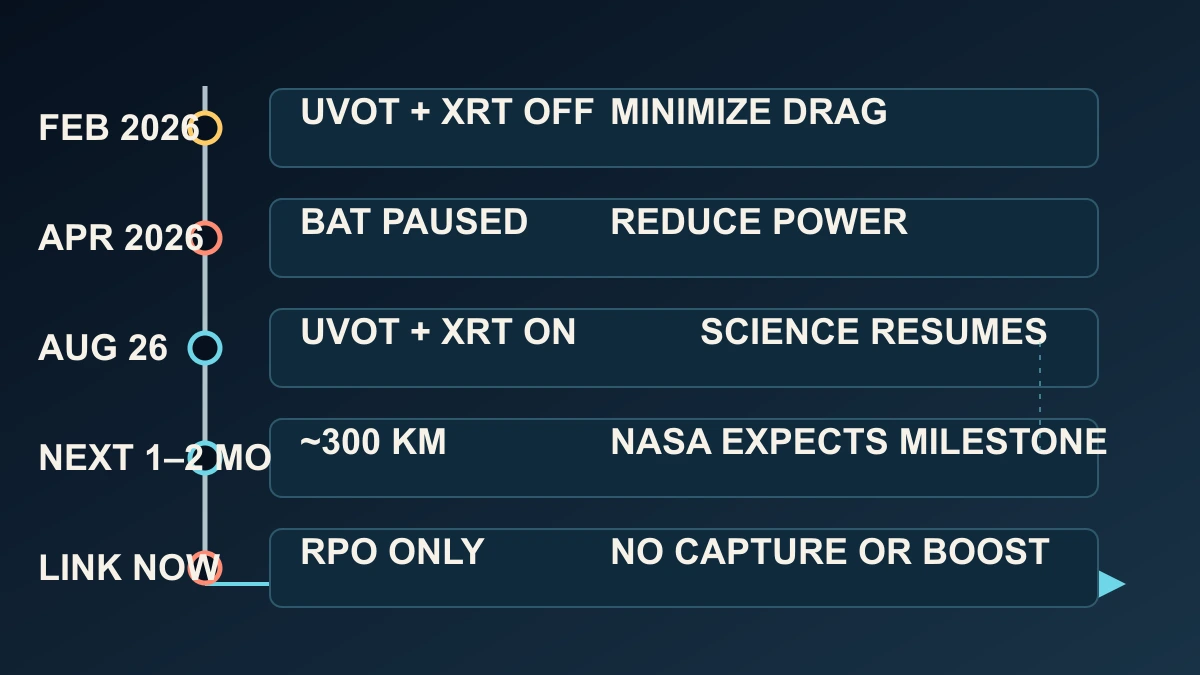
The servicing mission's status is a separate layer of the story. NASA's Swift Boost Mission page says an ongoing attitude-control issue means LINK will not capture or boost Swift to a higher altitude as planned. LINK will still attempt rendezvous and proximity operations, which can demonstrate servicing capabilities and gather lessons for future missions. That is not the same as grabbing Swift, raising its orbit or returning it to a condition with a guaranteed scientific lifetime. The current NASA report also says the commercial mission's focus has shifted toward demonstrating rendezvous technologies.
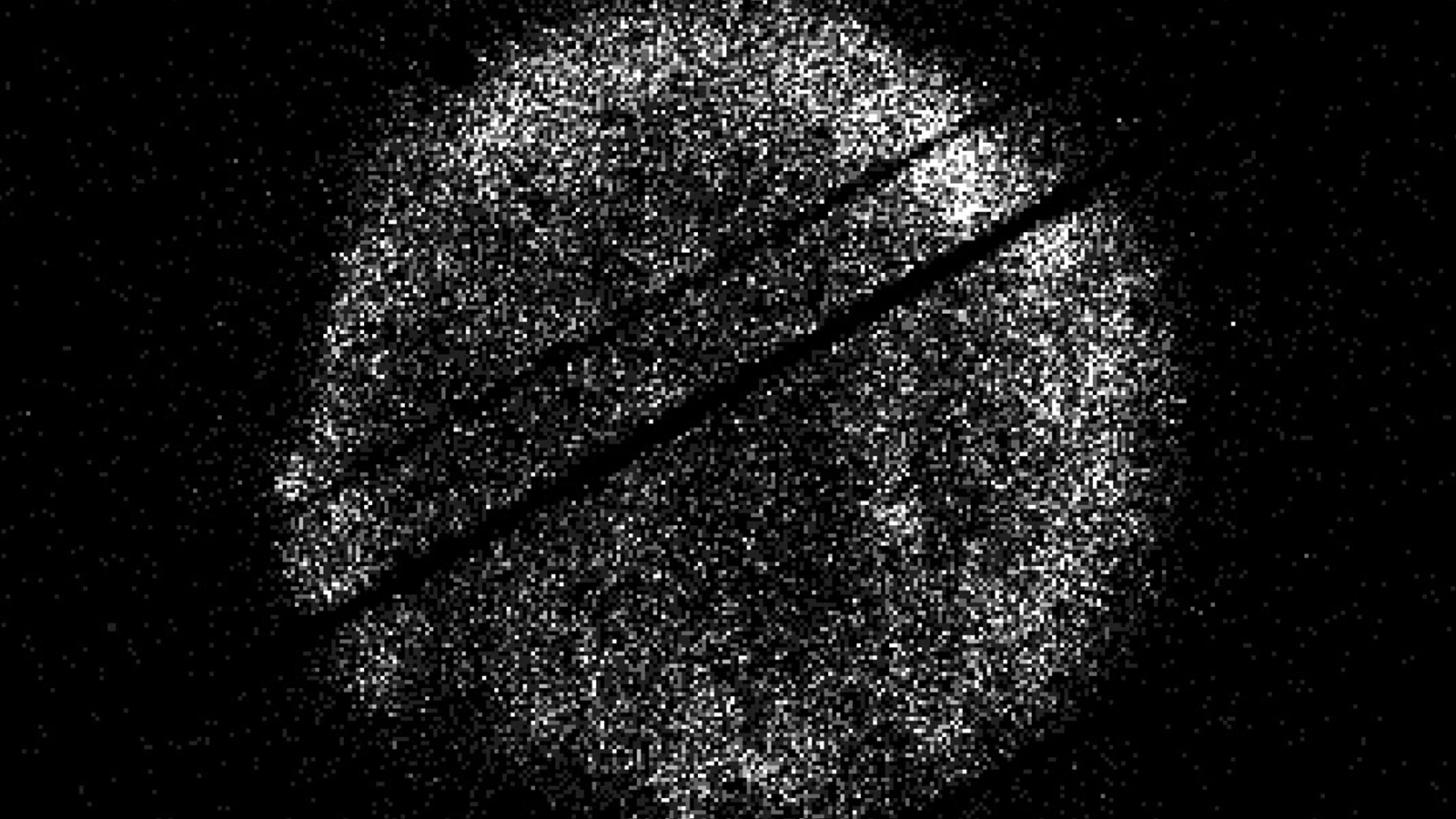
Put together, the evidence answers the original question without turning a restart into a rescue headline. Swift can observe again because its operators preserved a workable altitude window through low-drag operations, then restored UVOT and XRT while BAT stayed paused. NASA's next milestone is an expected approach to 300 kilometres, not a promised orbit raise. Established: the two-telescope restart and the Tycho X-ray observation. New: science operations resumed after the planned boost was scaled back. Uncertain: BAT's return timing and how much observing time remains. Not proved: capture, boost, full three-instrument operations or a mission extension beyond NASA's projections.
Sources and further reading
- NASA Science: NASA's Swift Restarts Science Observations ↗
- NASA Science: The Swift Spacecraft ↗
- NASA Science: Swift Boost Mission ↗
- NASA Science: NASA Predicts Swift Spacecraft's Location for Boost Mission ↗
- NASA Science: NASA, NOAA: Sun Reaches Maximum Phase in 11-Year Solar Cycle ↗
- NASA/Swift: Tycho supernova remnant XRT image ↗
- NASA: Guidelines for using NASA Images and Media ↗
This article was written for Curiosity Desk. We do not copy other publishers or invent quotes. If a material error is found, we correct it openly.
Read the full standards →One answer should lead to a better question
Bring your curiosity to the group
Curious Minds is our public Facebook community for surprising science, strange history, Australian wildlife and everyday questions. No copied posts, no personal-friend invitations and no link dumping.
- Three self-contained discussion prompts each week
- Sourced answers and honest uncertainty
- Respectful conversation without spam