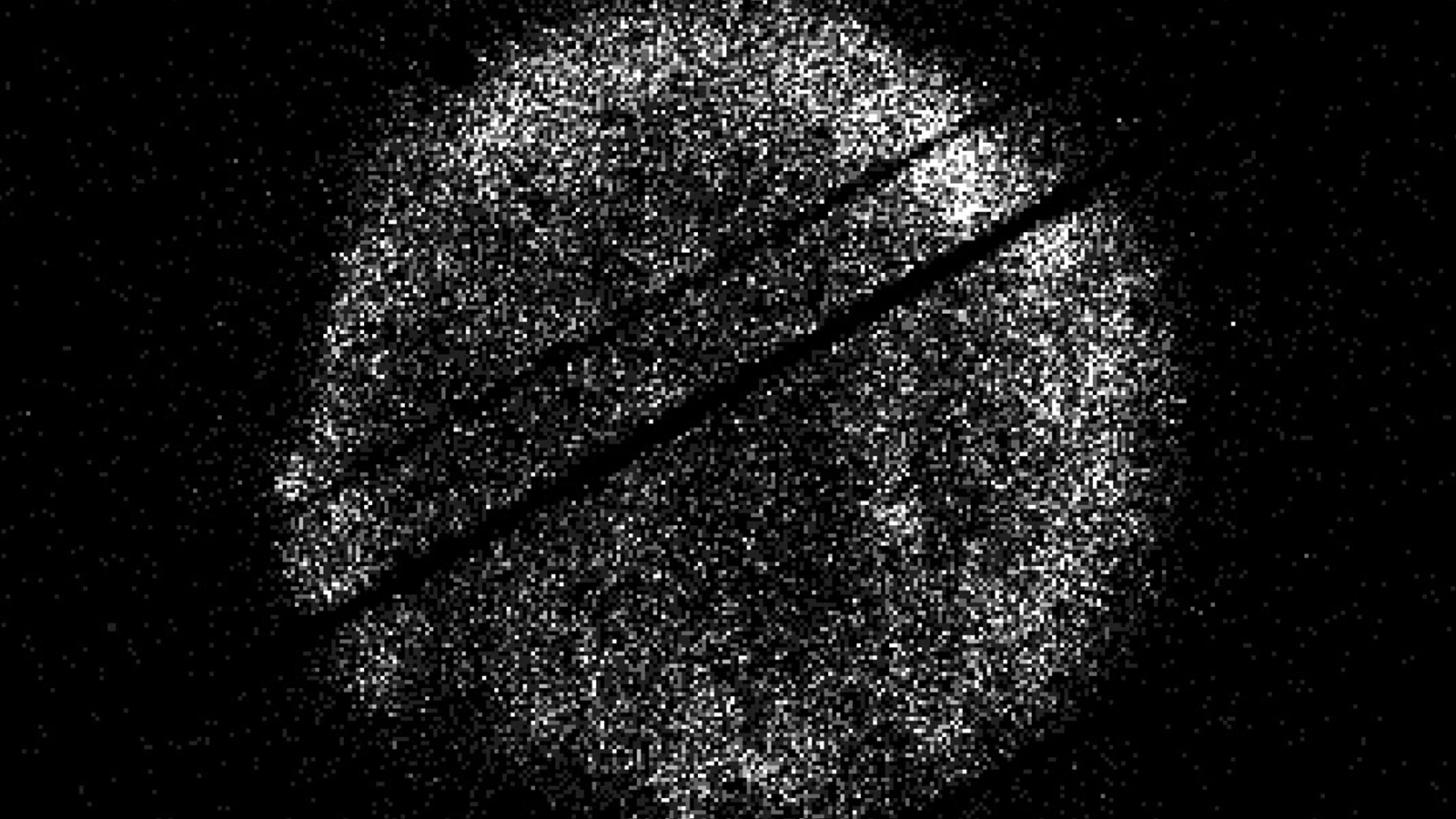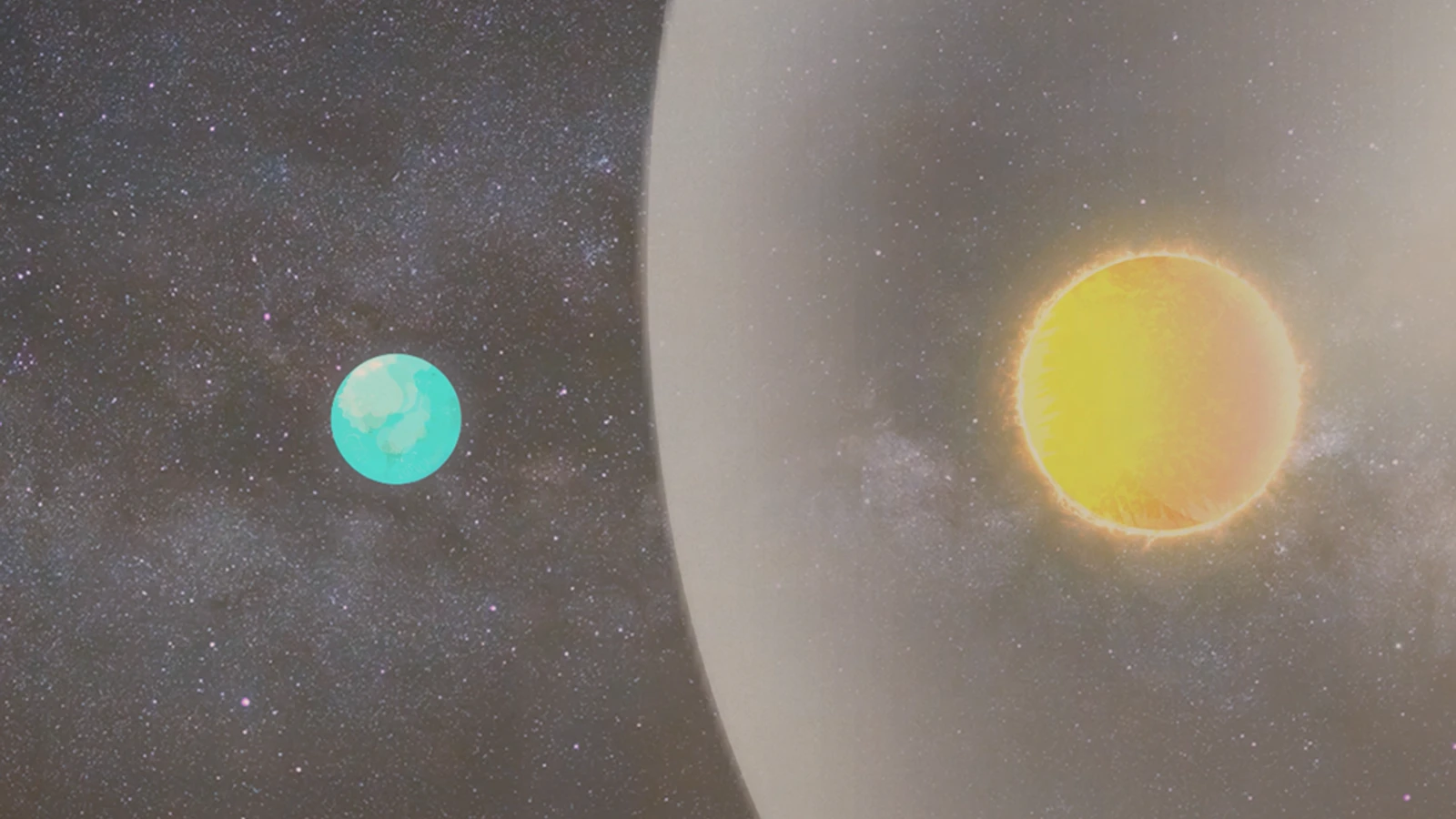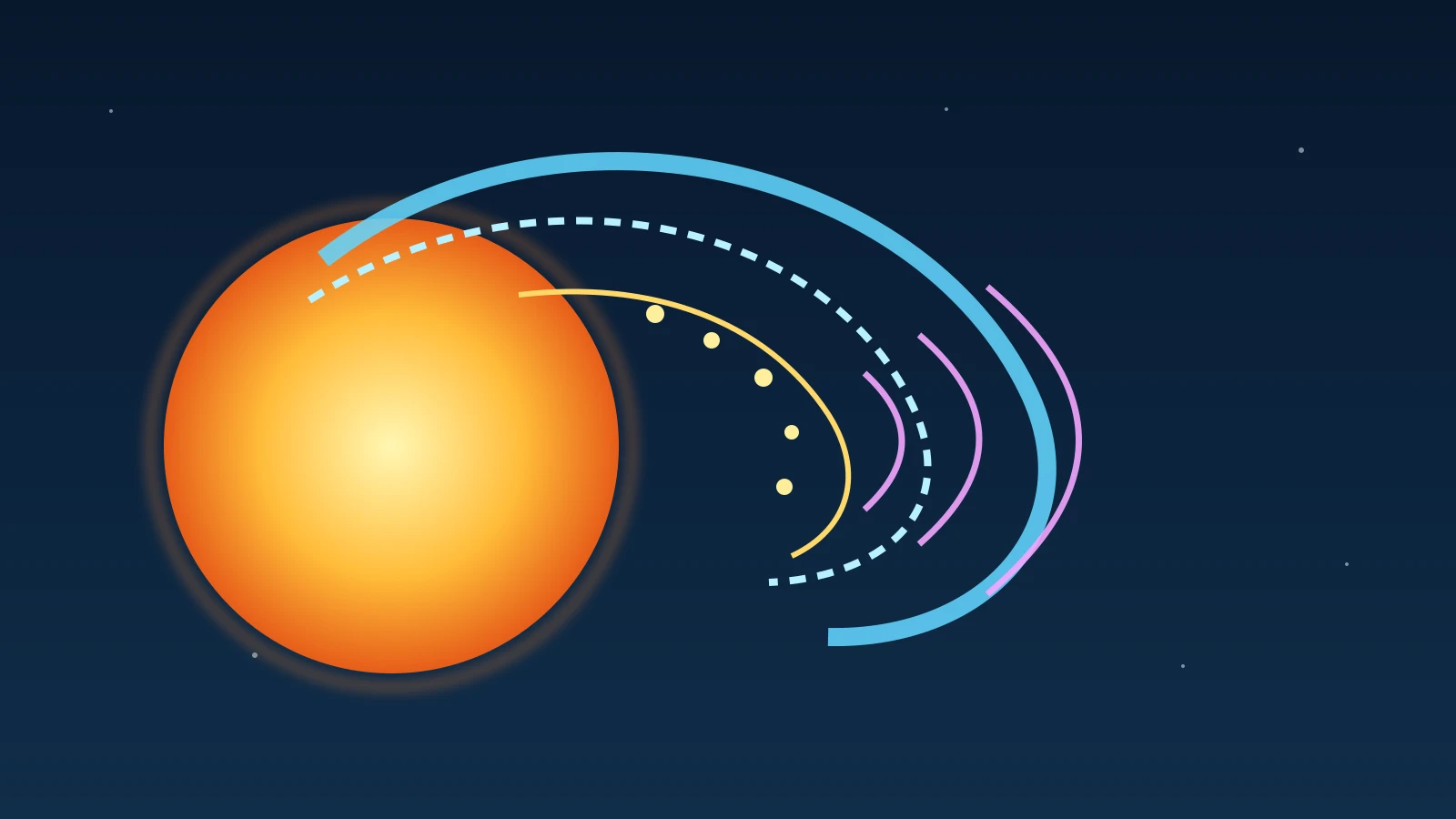
A Type IV burst is radio emission from trapped electrons
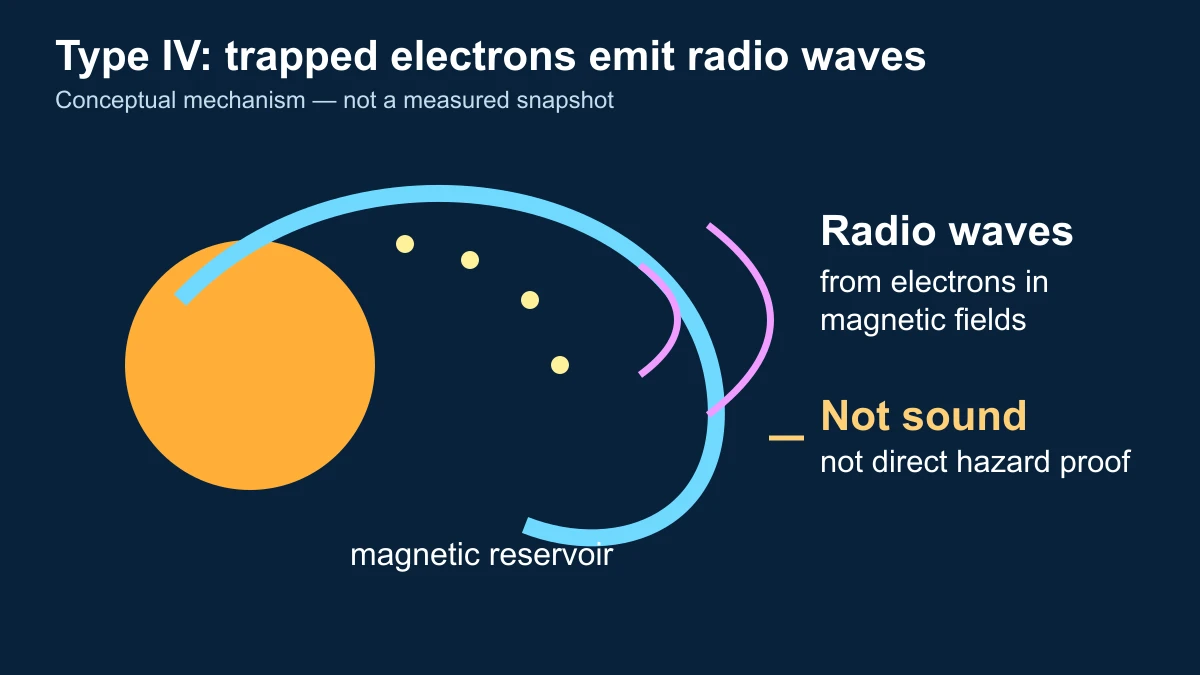
The 19-day event was not a sound coming from the Sun. It was a Type IV radio burst: radio emission associated with energetic electrons held in magnetic fields high in the Sun’s atmosphere. NASA says the event began in August 2025 and lasted far longer than the hours-to-days span typical for bursts of this kind.
A useful picture is a magnetic reservoir, not a loudspeaker. Magnetic fields can guide charged particles, and moving electrons in that environment can produce radio emission that instruments detect. The peer-reviewed study calls this event a corotating electron reservoir. That technical name captures the central finding: a long-lived magnetic environment kept supplying an observable radio source as the Sun turned.
Solar rotation let different spacecraft watch different parts of the same event
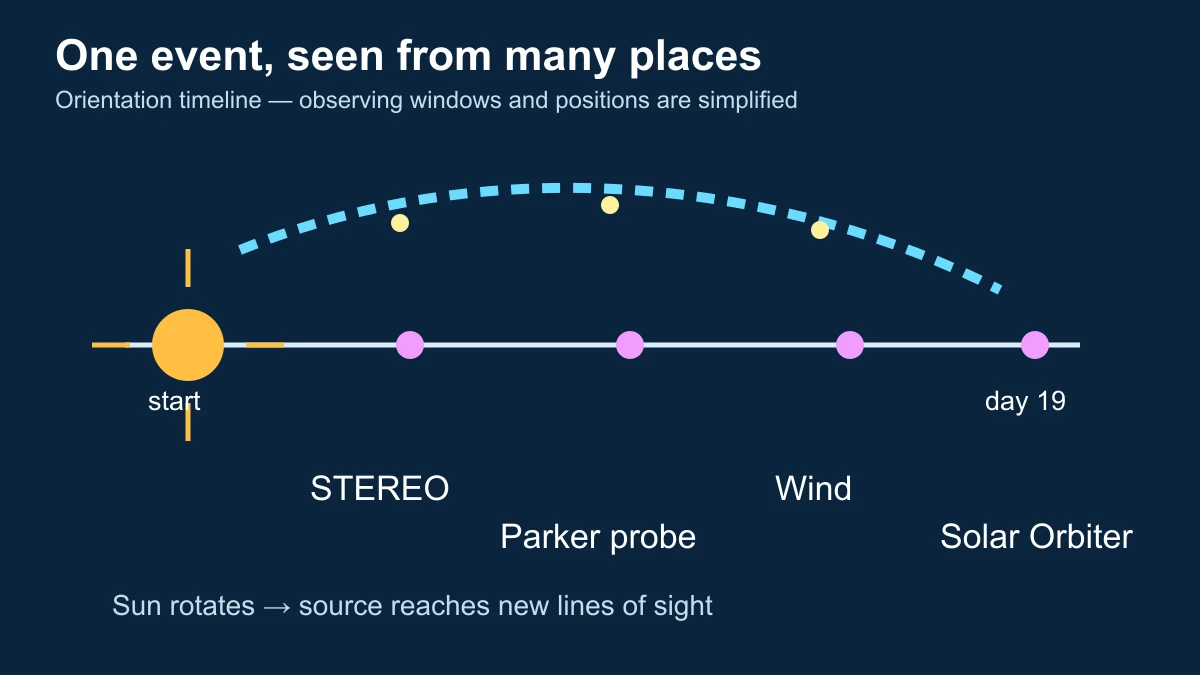
No one spacecraft watched the source continuously for all 19 days. NASA reports that STEREO, Parker Solar Probe, Wind and Solar Orbiter each observed the burst for a few days. They were spread through the inner Solar System, so each had a different line of sight.
As the Sun rotates, a feature in its atmosphere moves into and out of view from different locations. Combining those partial views made it possible to follow one unusually persistent source rather than mistake a sequence of observations for unrelated bursts. The observation is a geometry lesson as much as a duration record: a long event can become visible in stages when the observers are in different places.
That distinction matters when reading the headline. The 19 days describe the full event reconstructed from complementary observations, not an uninterrupted recording by a single probe. Different viewing angles can reveal a solar source at different times, while a shared physical explanation is tested against the timing and location of those observations. The result is stronger than treating each detection as a separate burst, but it still leaves room for later work on exactly how the magnetic environment stayed supplied with energetic electrons across the interval. That is an evidential limit, not a flaw in the observations themselves.
The source was a helmet streamer, but the full cause of the duration is still open
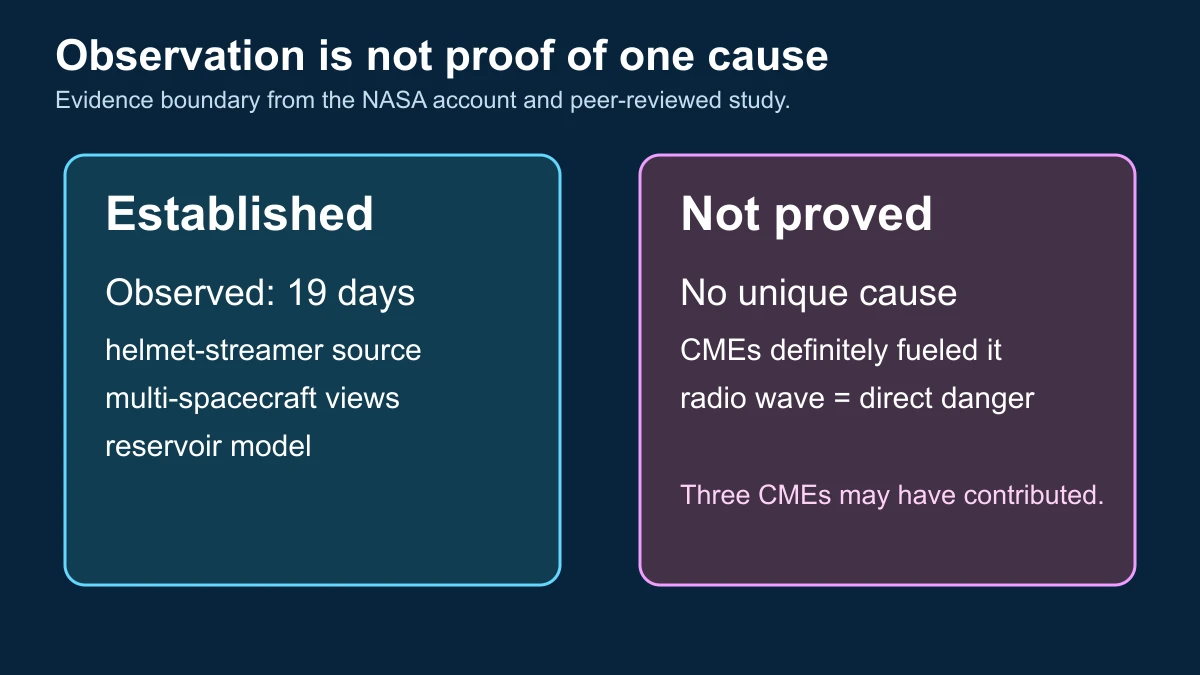
Using STEREO data, the researchers traced the source to a helmet streamer, a large magnetic structure in the solar corona. NASA describes the structure as the kind of feature that can trap electrons. That supports the reservoir explanation for why the burst could remain detectable long enough for different spacecraft to see it.
NASA also says scientists think three coronal mass ejections in the same region may have fueled the long event. ‘May’ is the key word. The observations and the magnetic-source model are evidence; they do not establish a single unique cause for every day of the burst. Nor do they show that every helmet streamer or Type IV burst will behave this way. A later analysis could refine how much the ejections, magnetic geometry and continuing particle supply each mattered.
Radio emission is not itself a warning siren for people or spacecraft
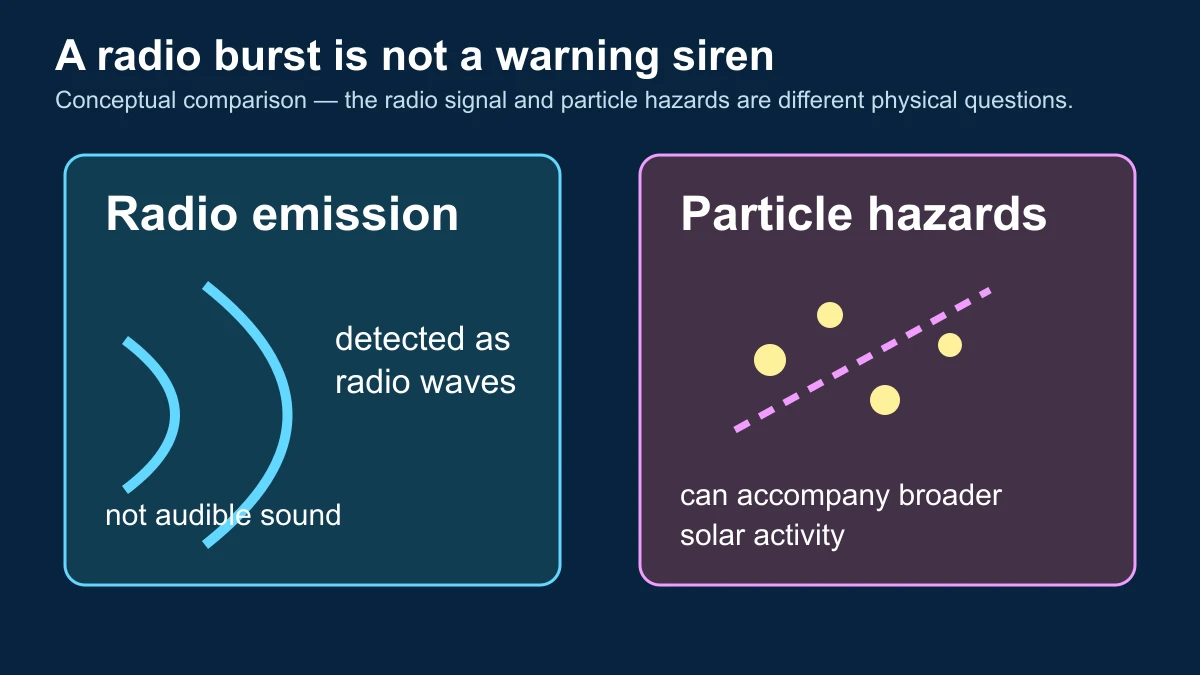
Radio waves from the burst are not audible sound, and the report does not say that this radio signal itself harmed people or spacecraft. NASA notes that the broader magnetic environments that produce solar activity can also be associated with dangerous particles, which is a different physical issue from hearing or being struck by the radio emission.
That distinction still makes the result useful for space-weather research. If scientists can better identify radio bursts and link them to their solar magnetic sources, they can improve the evidence used in forecasting. The careful conclusion is not that a 19-day radio burst is a direct danger. It is that an unusually long, well-observed event gives researchers a rare test case for learning how solar magnetic structures sustain and reveal radio emission.
Sources and further reading
This article was written for Curiosity Desk. We do not copy other publishers or invent quotes. If a material error is found, we correct it openly.
Read the full standards →One answer should lead to a better question
Bring your curiosity to the group
Curious Minds is our public Facebook community for surprising science, strange history, Australian wildlife and everyday questions. No copied posts, no personal-friend invitations and no link dumping.
- Three self-contained discussion prompts each week
- Sourced answers and honest uncertainty
- Respectful conversation without spam