What a rocket plume does near the lunar surface
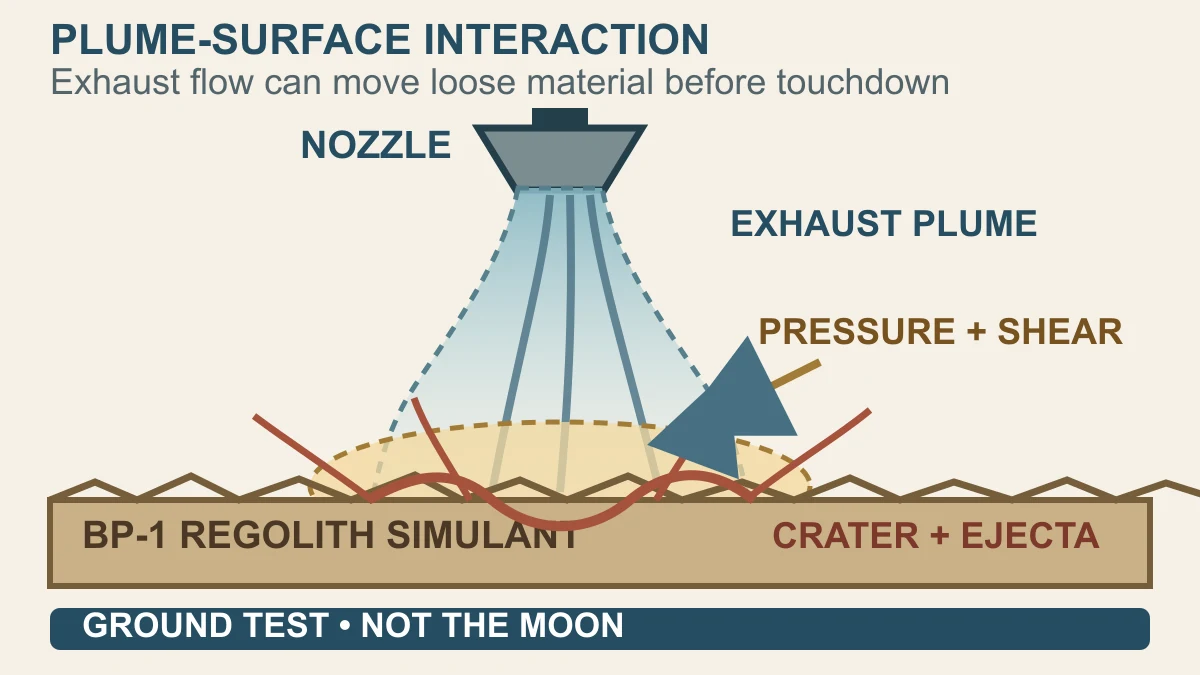
A lander's engine does not simply push the vehicle downward. As the exhaust expands toward the ground, its flow transfers pressure and shear to loose surface material. On the Moon, that material is regolith: a fractured, dusty layer whose particles can be lifted, accelerated and thrown outward. The moving material can obscure sensors, strike nearby hardware or change the shape of the surface below the vehicle, which is why engineers study the interaction as its own landing problem.
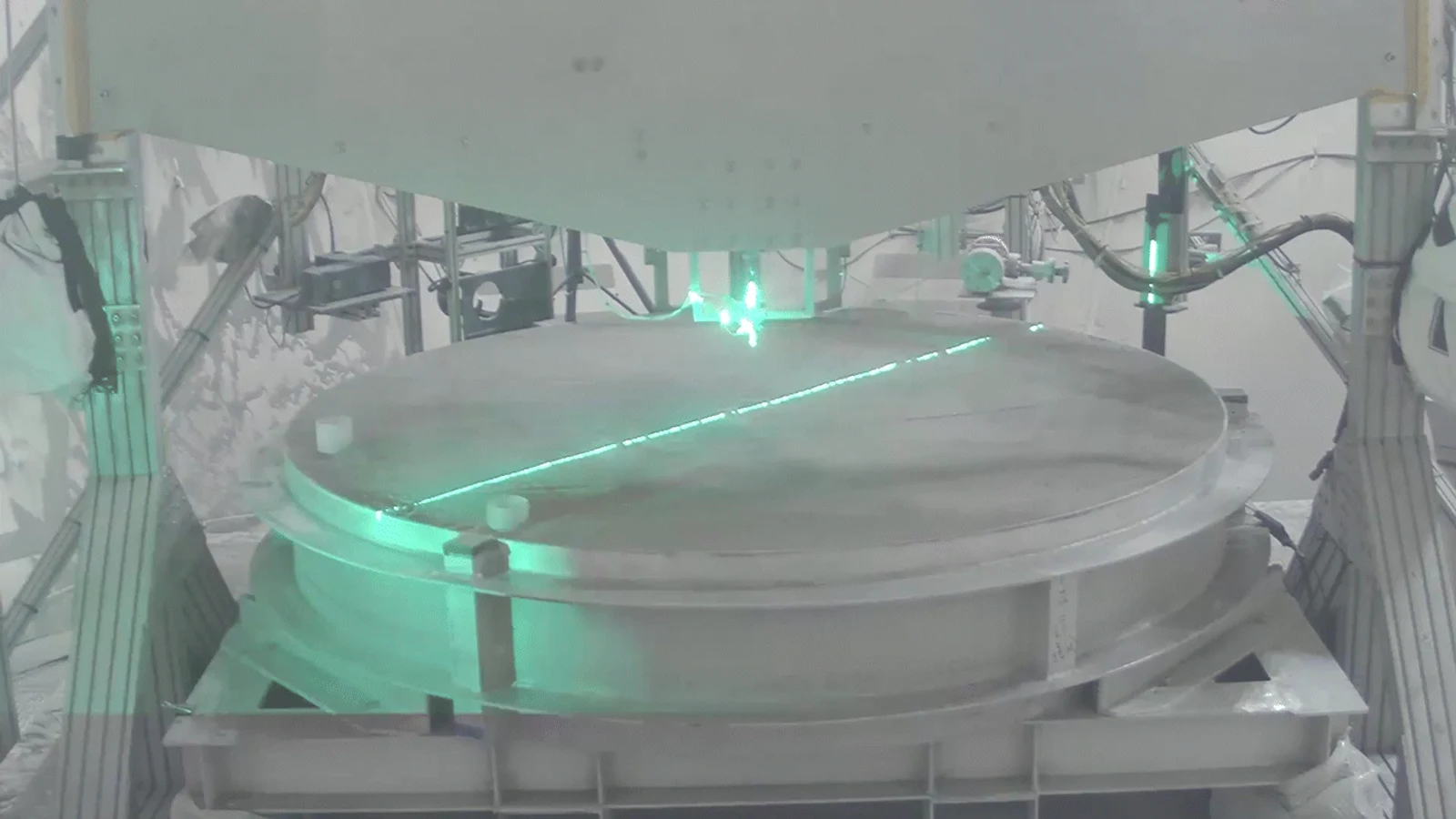
NASA's current test uses an ethane plume simulator inside a 60-foot spherical vacuum chamber at Langley. The simulator is designed for about 100 pounds of thrust and heats the gas without burning it, while a roughly 6.5-foot-wide, one-foot-deep bin holds Black Point-1, a jagged and cohesive lunar-regolith simulant. That arrangement reproduces a controlled test condition; it does not put lunar soil or a flying lander inside the chamber.
The useful mental model is a short-lived collision between a fast-moving gas flow and a granular surface. Some of the response is a crater forming where the flow concentrates, while some is an ejecta sheet spreading away from it. The exact outcome depends on the nozzle, thrust, height, surface properties and gravity. NASA's technical records therefore treat plume-surface interaction as a measurement and modelling problem, not as one fixed picture of every landing.
How tests measure dust, pressure and surface response
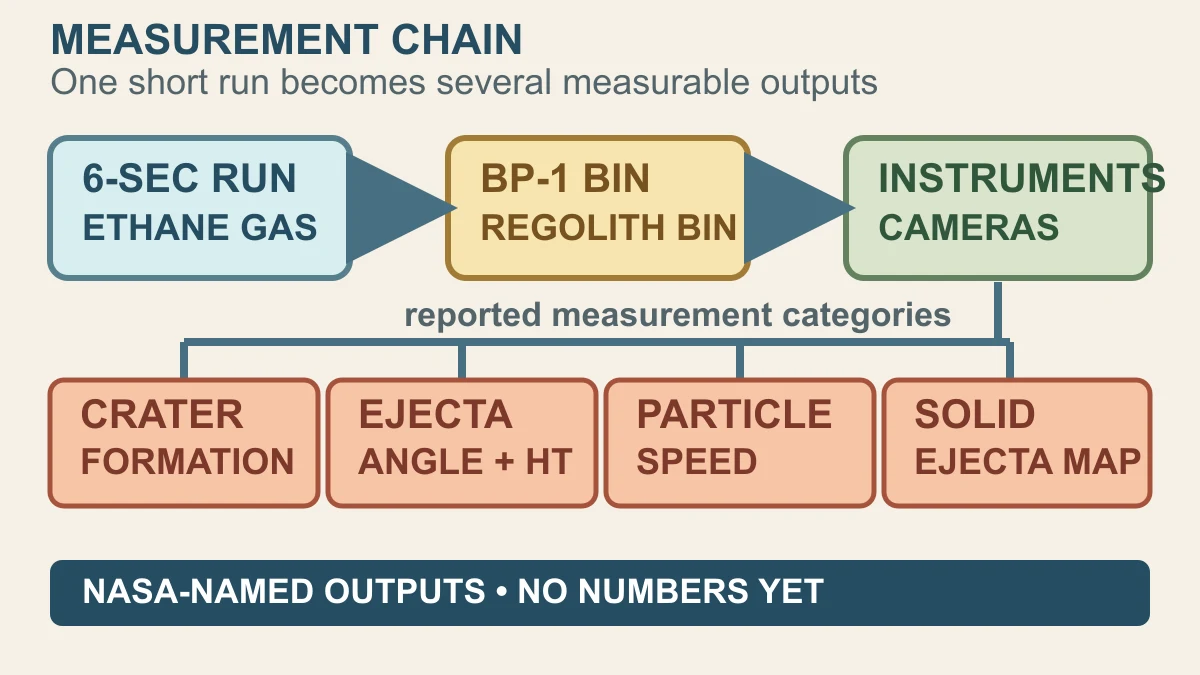
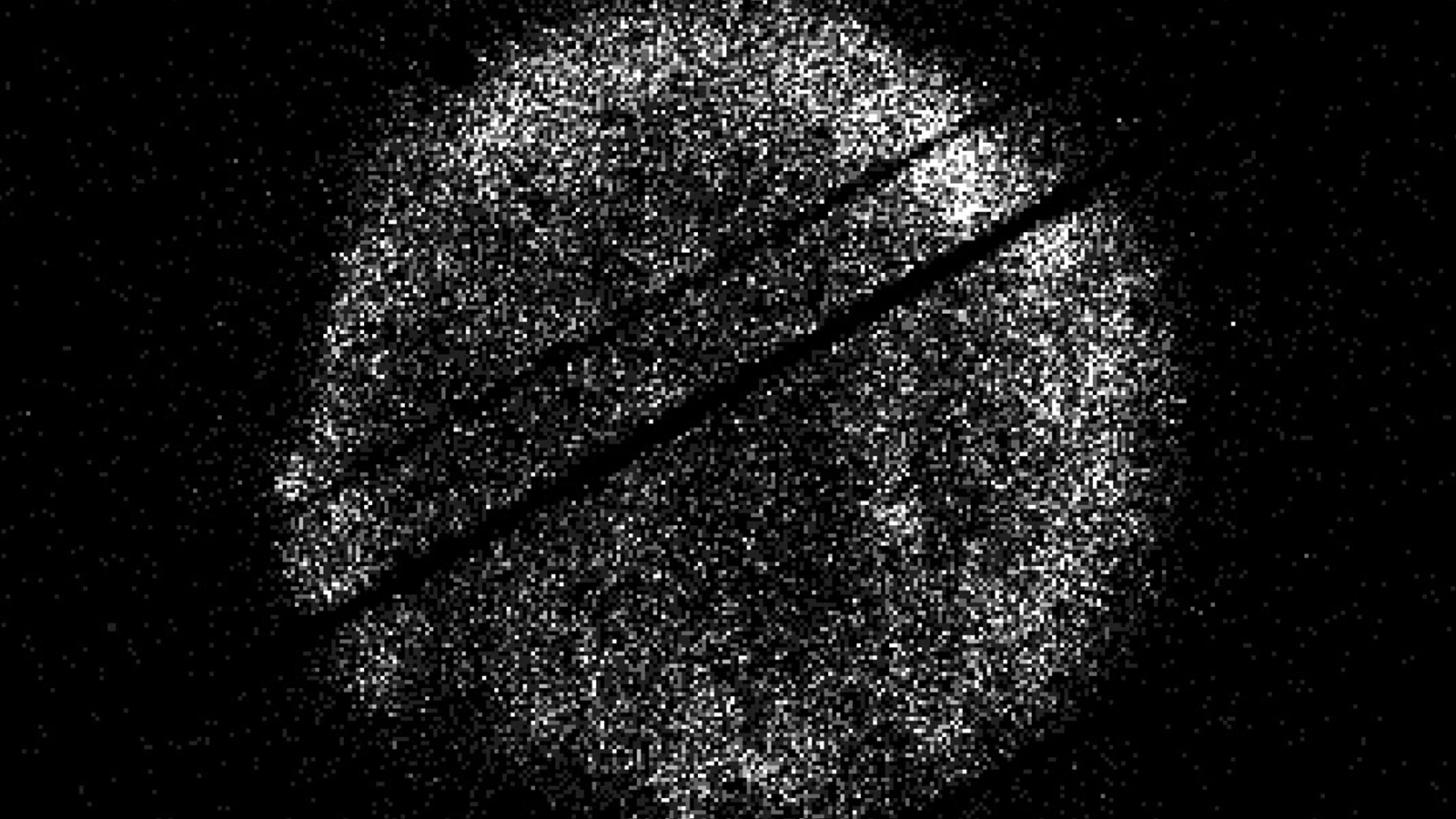
The current NASA report says each run lasts about six seconds and that instruments measure several different aspects of the response: crater formation, the angle and height of the ejecta sheet, the spatial distribution of solid ejecta and the speed of regolith particles. Those categories answer different questions. Crater geometry shows where the surface was displaced; ejecta direction shows how material leaves; particle speed and distribution show how far and how forcefully it may travel.
That output list is more informative than a single image of dust. A camera can show the shape and timing of a plume or ejecta front, while other instruments can turn motion into quantities that can be compared across nozzle heights and test conditions. Earlier NASA vacuum work used flow visualisation and pressure measurements around a scaled plume and flat plate, giving engineers a related view of shocks, wall jets and surface loading without pretending that every test is the same as the current regolith-bin campaign.
Black Point-1 matters because a granular surface is part of the experiment, not just background scenery. NASA describes the simulant as coming from a terrestrial lava flow with jagged particles that can stand in for some lunar-regolith behaviour. The Lunar Surface Data Book also warns that particle size, porosity, vehicle configuration, thrust, trajectory and distance affect the interaction. A result is therefore useful when its conditions are recorded alongside its measured response.
What a ground test can—and cannot—prove about a landing
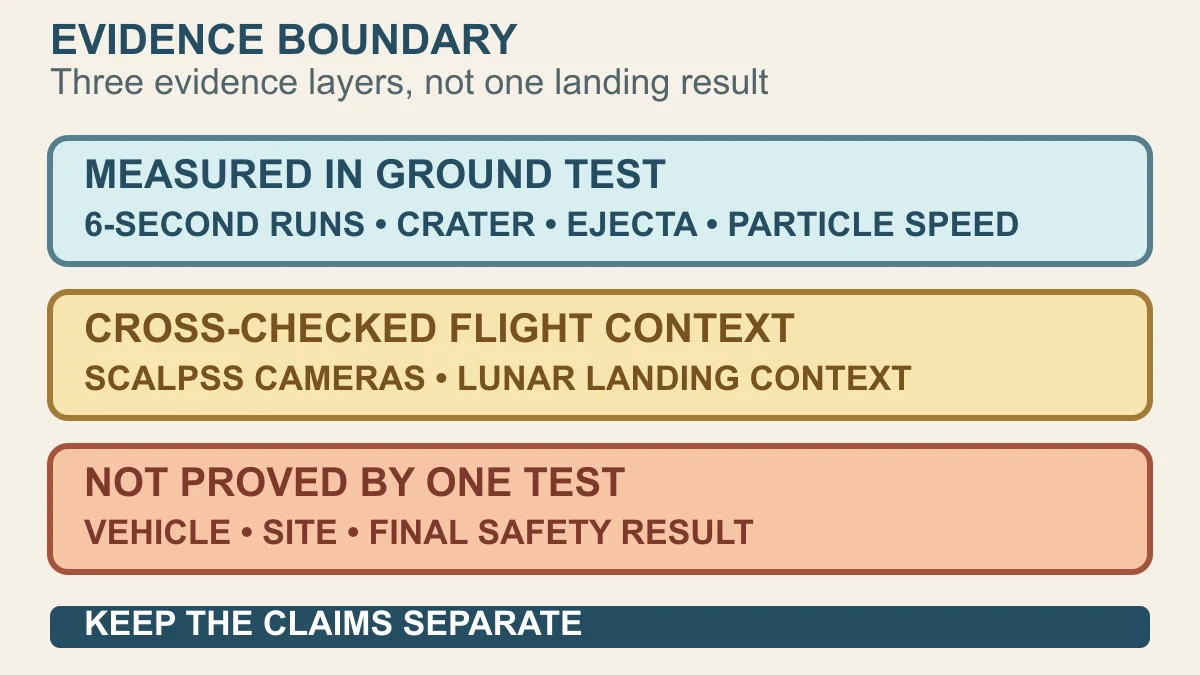
A ground campaign can establish what happened under its controlled conditions: how a selected plume disturbed a selected simulant, how a crater developed and what the instruments recorded about ejecta. It can also improve a model that connects those observations to other conditions. NASA's TechPort record adds a reduced- and lunar-gravity flight-test route using stereo photogrammetry, showing why gravity and three-dimensional measurement matter when researchers try to move beyond a flat laboratory view.
There is a separate flight context. NASA describes SCALPSS cameras and related sensing as a way to observe plume-surface interaction during a real lunar landing, including stereo imaging, active illumination and ejecta-impact detection. That kind of observation can test how a model meets an actual mission event. It should not be folded backward into the current Langley report: a chamber run and a lunar landing are complementary evidence, not interchangeable proof.
So the current defensible conclusion is precise. NASA has begun measuring the dust, pressure-related response, cratering and ejecta behaviour produced by a controlled plume test, with the stated aim of improving future predictive models. The sources do not report a final current-run number, validate a named lander or guarantee a landing-site outcome. Those claims would require mission-specific conditions, calibrated measurements, uncertainty and a result from the vehicle and surface in question.
Sources and further reading
- NASA — NASA Begins Moon Mission Plume-Surface Interaction Tests ↗
- NASA Marshall — Digging the Dirt: NASA Benefits from Lunar Surface Simulant Testing ↗
- NASA — NASA Cameras on Blue Ghost Capture First-of-its-Kind Moon Landing Footage ↗
- NASA — NASA Selects Intuitive Machines to Deliver Artemis Science, Tech to Moon ↗
- NASA TechPort — Three-Dimensional Plume-Surface Interaction and Crater Formation Dynamic Measurements ↗
- NASA NTRS — Flow Visualization for Plume-Surface Interaction Testing Within Large-Scale Vacuum Environments ↗
- NASA NTRS — Lunar Surface Data Book ↗
- NASA — Guidelines for using NASA Images and Media ↗
This article was written for Curiosity Desk. We do not copy other publishers or invent quotes. If a material error is found, we correct it openly.
Read the full standards →One answer should lead to a better question
Bring your curiosity to the group
Curious Minds is our public Facebook community for surprising science, strange history, Australian wildlife and everyday questions. No copied posts, no personal-friend invitations and no link dumping.
- Three self-contained discussion prompts each week
- Sourced answers and honest uncertainty
- Respectful conversation without spam