What makes a sonic boom reach the ground
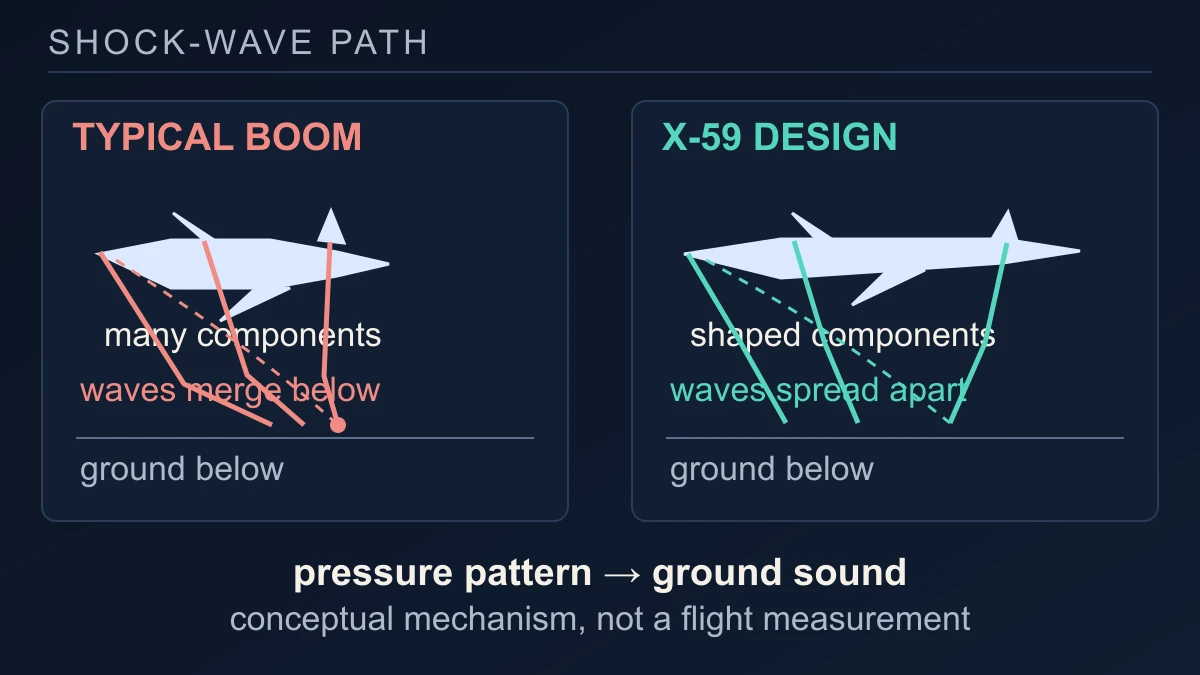
A sonic boom is not a single bang created at the instant an aircraft crosses Mach 1. NASA's current explanation calls it the audible evidence of pressure waves that keep forming while a supersonic aircraft moves through the air. Below the speed of sound, pressure changes can travel ahead and give air time to move aside. Above it, the aircraft outruns those small changes, so the pressure jumps become strong, rapid shock waves.
Every part that makes the air change direction can contribute: the nose, cockpit, wings, engine inlets, tail and other bumps. At first, those waves are separate. As they travel outward and downward, they can pile up and merge. By the time the pattern reaches the ground, NASA says it can leave two main pressure changes that people hear as the familiar boom. The sound therefore depends on the whole aircraft and the path from the aircraft to the listener, not only on the moment the plane passes the speed of sound.
That path also explains why one flight can disturb a broad strip of ground. The waves spread outward from the aircraft's track, making what NASA calls a sonic-boom carpet. At 55,000 feet, the sound can take almost a minute to reach the ground, by which time the aircraft has travelled miles ahead. Atmospheric conditions and the flight path change the result too, so two people below the same aircraft may hear different versions of the pressure pattern.
How the X-59 reshapes the pressure-wave pattern
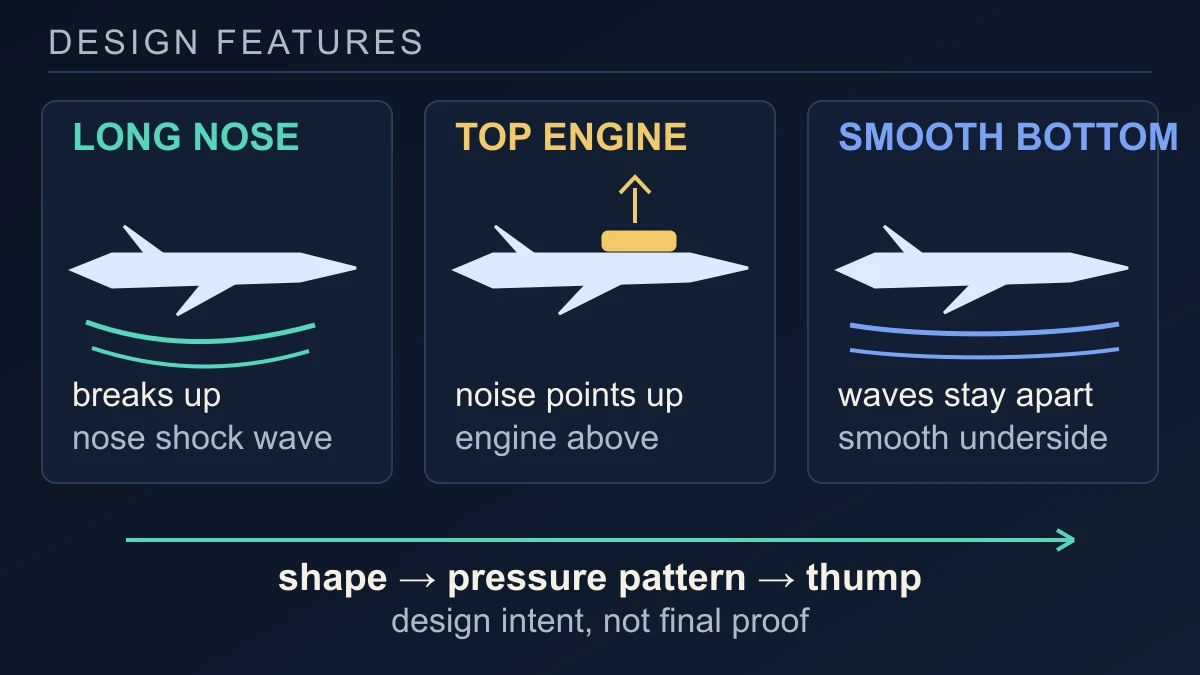
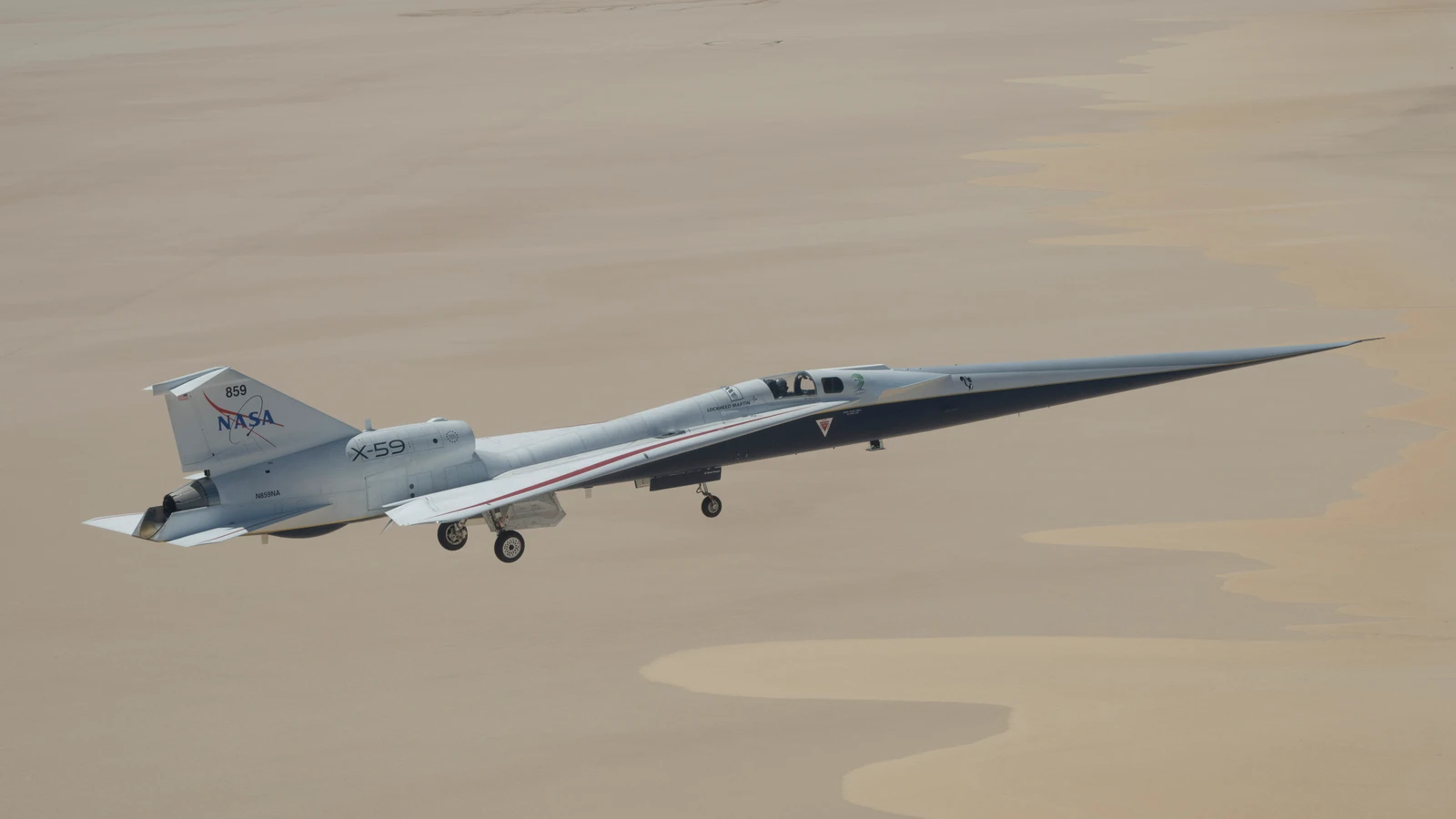
The X-59's answer is to manage the pressure changes before they combine into the sharpest version of the boom. NASA describes the aircraft's long, thin nose and its overall outer mold line as a way to spread the shock waves rather than letting them merge into the usual loud pattern. The goal is not to remove the waves. It is to make the pressure change arrive as a gentler, more distributed signal—a quieter sonic thump.
The shape is a system, not a single magic nose. NASA's design explanation says the swept-back wing reduces drag at high speed, while the long nose and other surfaces help control where the shock waves form. The engine is mounted on top so its noise is directed away from people below. The aircraft also has a smooth underside, which NASA says helps keep waves from merging behind the plane. Those choices are connected: the air sees the aircraft as one carefully arranged set of surfaces rather than a collection of abrupt obstacles.
The diagram above is therefore a mechanism map, not an audio recording or a measured pressure trace. It shows why the design can change the timing and strength of the waves that travel toward the ground. The exact sound still depends on speed, altitude, atmosphere and flight path, which is why Quesst needs flight measurements and later tests with people on the ground.
What the aircraft has shown and what Quesst still has to measure
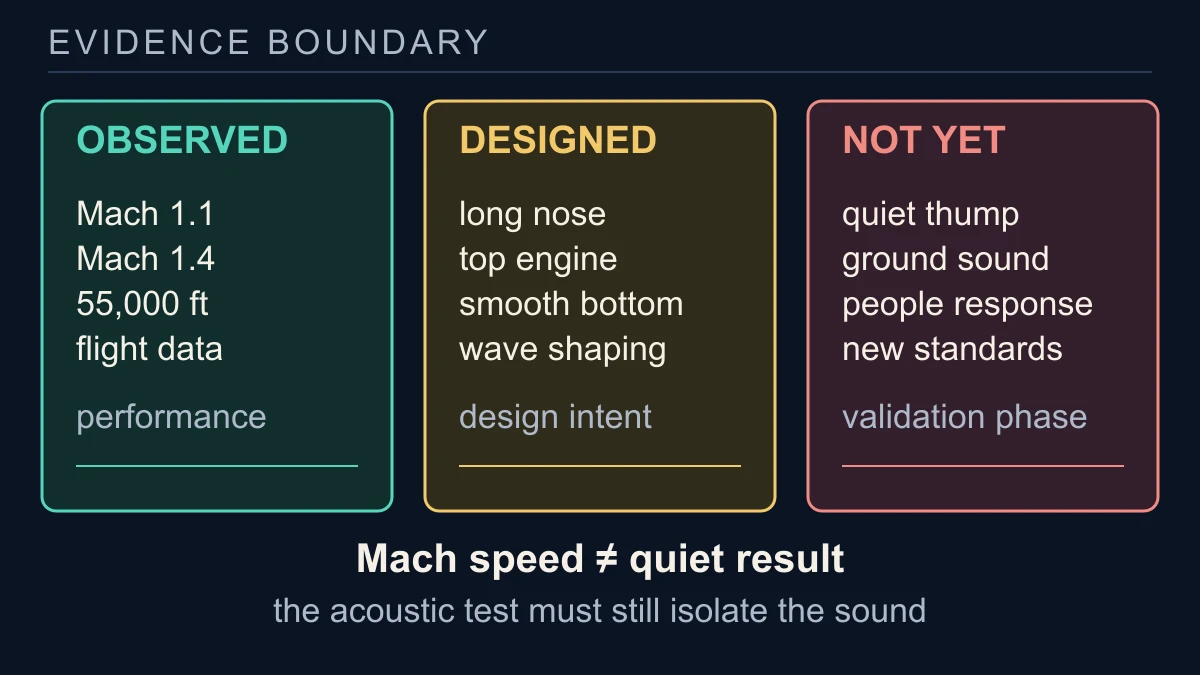
NASA has already demonstrated that the X-59 can enter the supersonic part of its flight envelope. On 5 June 2026, the aircraft reached about Mach 1.1 at 43,400 feet during its first supersonic flight. On 12 June it reached about Mach 1.4 at 55,000 feet, the speed and altitude planned for later community-response flights. Those are important performance results: the aircraft and its systems reached the conditions the mission was designed to study.
They are not yet the same as proving what a person on the ground hears. During the early supersonic flights, NASA used a traditional F-15 chase aircraft. Its ordinary sonic booms obscured any sound made by the X-59, so the flights could establish performance without isolating the quiet acoustic signature. NASA's programme descriptions separate this work from the later acoustic-validation phase, when researchers will measure the X-59's supersonic sound profile to check whether it performs as intended.
After that, Quesst plans to fly the X-59 over selected U.S. communities and ask people how the sound affects them. NASA will use those responses, together with measurements, to provide data to regulators considering future noise standards for supersonic flight over land. The honest answer today is therefore precise: the X-59's shape is designed to turn a sharp boom into a quieter thump, and the aircraft has reached the relevant speed and altitude. The isolated ground sound and public response are the evidence still to come.
Sources and further reading
This article was written for Curiosity Desk. We do not copy other publishers or invent quotes. If a material error is found, we correct it openly.
Read the full standards →One answer should lead to a better question
Bring your curiosity to the group
Curious Minds is our public Facebook community for surprising science, strange history, Australian wildlife and everyday questions. No copied posts, no personal-friend invitations and no link dumping.
- Three self-contained discussion prompts each week
- Sourced answers and honest uncertainty
- Respectful conversation without spam