A planned re-entry creates a repeatable observation
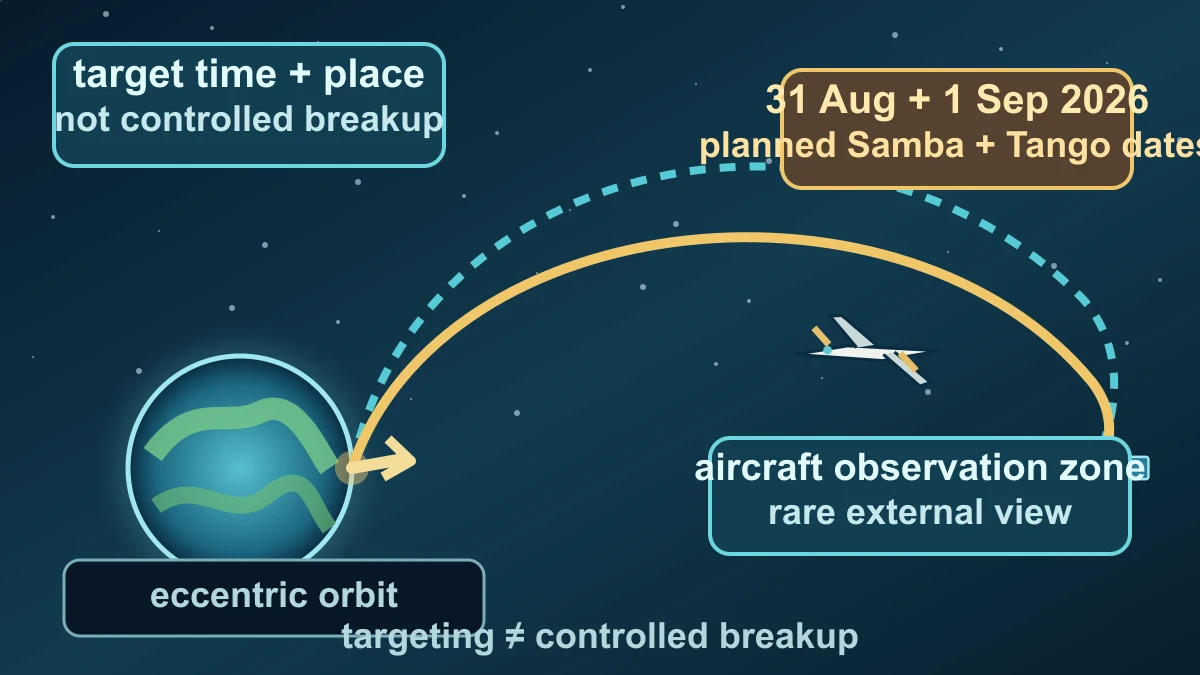
A targeted re-entry does not make a satellite's destruction controllable. It makes the time and place predictable enough for people and instruments to be in position when the atmosphere takes over. ESA says its remaining Cluster spacecraft, Samba and Tango, were manoeuvred so they can be observed from a plane during re-entries planned for 31 August and 1 September 2026. The spacecraft will still pass through changing atmospheric conditions and break apart according to their materials, attitude and local density. Targeting is therefore an observation strategy, not a promise about exactly what the cameras will see.
Cluster's highly eccentric orbit is part of what makes that strategy possible. ESA's earlier re-entry account explains that repeated low passes lose altitude and allow controllers to identify an orbit that reaches the approximate threshold where satellites begin to burn up, around 80 kilometres. A targeted corridor over a remote ocean reduces the area over which fragments could fall and gives an aircraft a realistic meeting point. But a predicted corridor is not a controlled laboratory track: atmospheric density can differ from the model, the final sighting can be hard to confirm and a small trajectory difference can matter to the observation flight. The useful preparation is logistical and statistical at the same time. Teams place the aircraft, telescopes and communications support where a narrow window makes sense, then treat the resulting sighting as one observation with known uncertainties rather than as a perfect replay of a simulation.
Cluster can be watched from outside
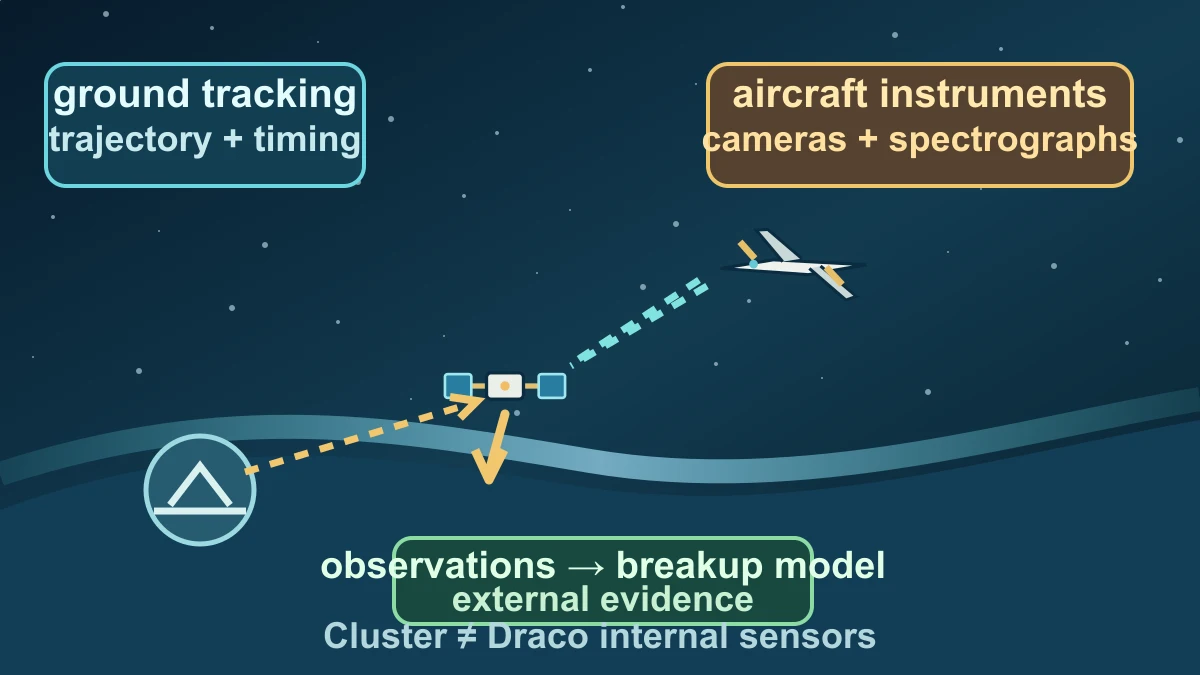
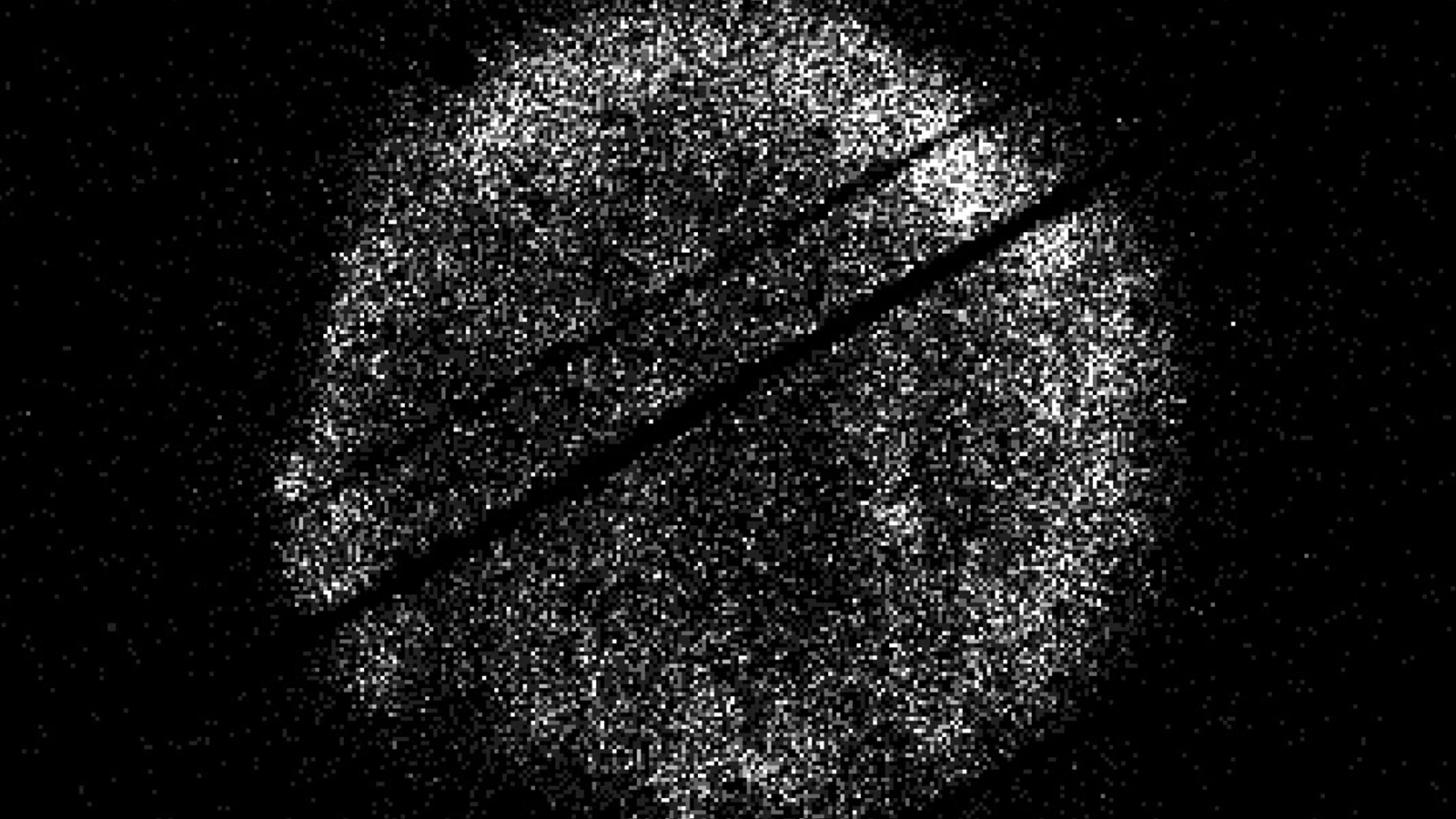
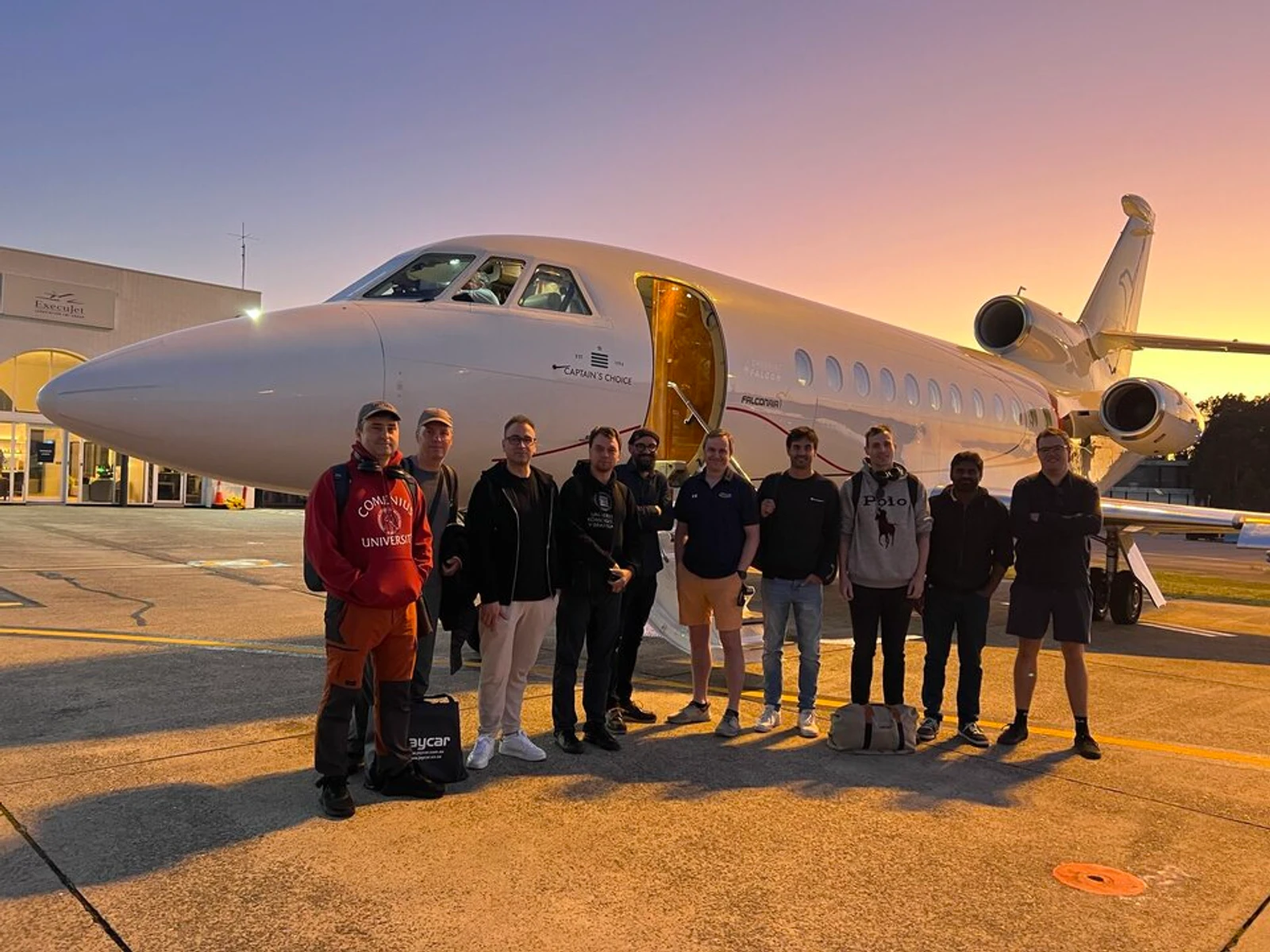
The value of the 2026 campaign is the combination of a known opportunity and repeated spacecraft. ESA's current update says engineers want better information on when satellites heat up, break apart and which materials survive. The earlier Salsa campaign shows what the external method involves: an aircraft can carry cameras and spectrographs, while ground stations and telescopes track the vehicle and its changing trajectory. Those views can record light, timing, shape changes and fragments from outside. They can then be compared with re-entry and breakup models rather than treated as a complete view of every internal failure. A useful record can include a negative result too: a missing sighting, an instrument saturated by daylight or a fragment that cannot be followed tells engineers where the next model or campaign needs better coverage.
Four near-identical spacecraft make comparisons more informative than one spectacular event. Salsa re-entered in 2024, Rumba followed in 2025, and ESA's current record places Samba and Tango in the remaining 2026 sequence. The conditions will not be identical, which is useful rather than a flaw: slightly different trajectories, weather and orientations can show which patterns repeat and which depend on circumstance. The comparison still has limits. If an instrument loses sight of the vehicle, if communications end early or if a fragment falls outside the aircraft's view, the missing measurement stays missing; it cannot be filled by assuming the model was right.
Cluster and Draco answer different questions
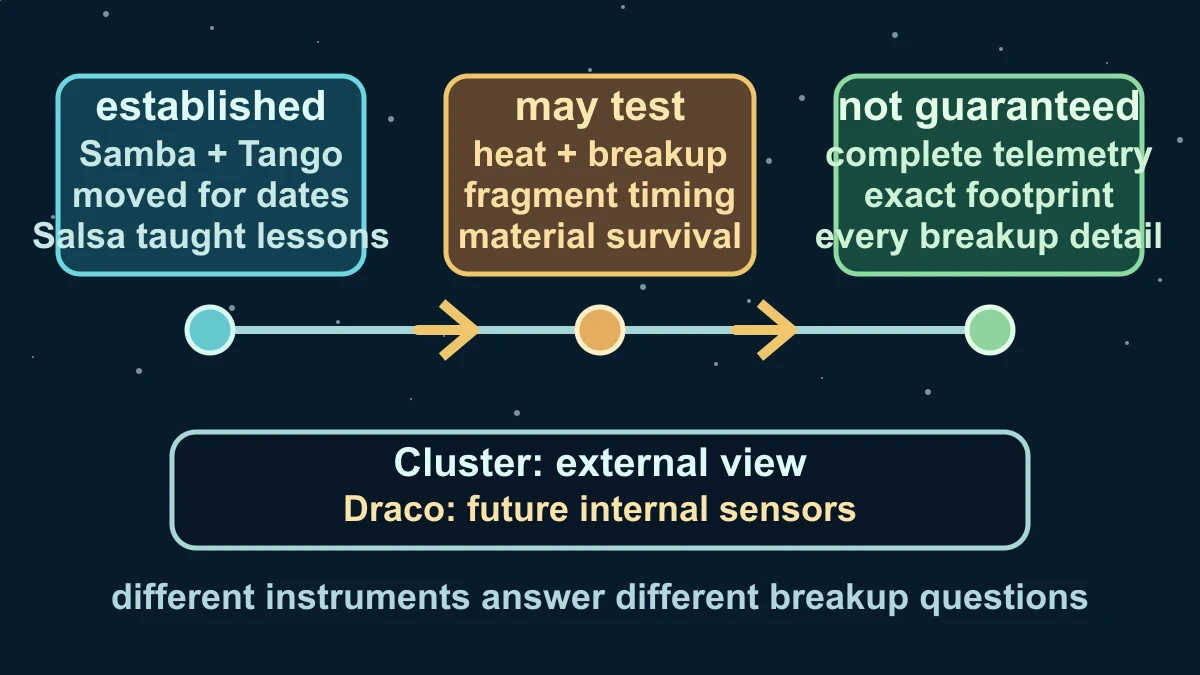
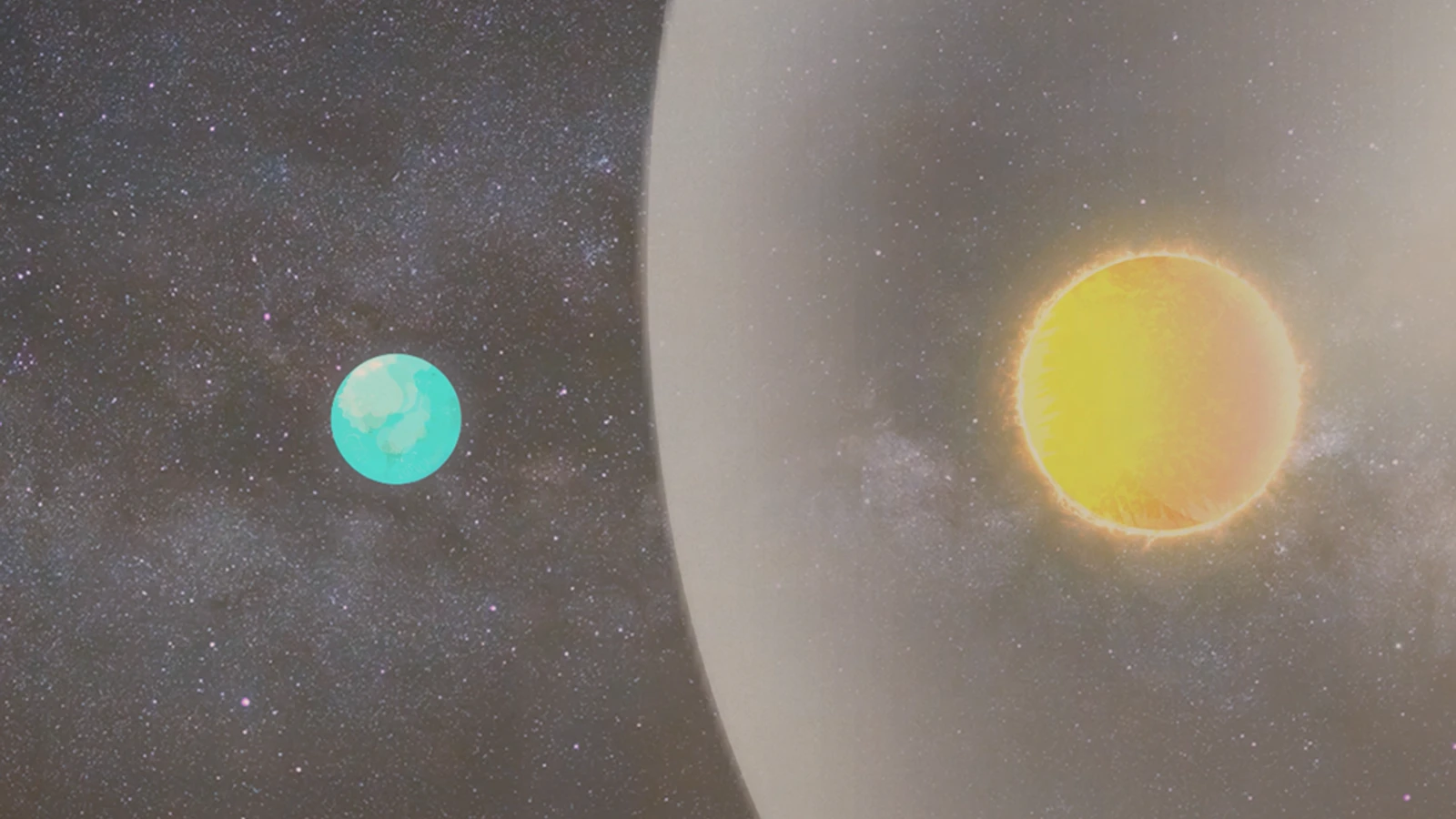
Cluster's planned data is an outside view of a real spacecraft entering the atmosphere. ESA's future Draco mission is designed to answer a different question from inside the destruction itself. Its planned satellite carries more than 200 sensors and four cameras, with an indestructible capsule intended to preserve telemetry after the surrounding vehicle breaks apart; ESA says the launch is scheduled for 2027. Draco is a contrast case, not a hidden component of Cluster. The distinction matters because a bright flash or a fragment track can reveal timing and appearance, while internal temperature, strain and pressure records can connect those observations to the vehicle's structural failure.
So the safe pre-event conclusion is narrow. Cluster may add rare external observations that help engineers calibrate breakup models and design spacecraft for demise, but it has not yet produced the planned Samba and Tango record at this checkpoint. The sources do not prove a complete telemetry stream, an exact surviving-fragment footprint, a public-safety outcome or a single universal breakup sequence. After the events, the responsible next step will be to compare the actual observations with the pre-event prediction, mark the uncertainties and update the model. A future re-entry can be valuable precisely because it tests what was expected; it is not valuable because every expectation is guaranteed to come true. The article should be updated only when a new official observation or analysis changes that evidence boundary, not merely because the calendar has reached a planned date.
Sources and further reading
This article was written for Curiosity Desk. We do not copy other publishers or invent quotes. If a material error is found, we correct it openly.
Read the full standards →One answer should lead to a better question
Bring your curiosity to the group
Curious Minds is our public Facebook community for surprising science, strange history, Australian wildlife and everyday questions. No copied posts, no personal-friend invitations and no link dumping.
- Three self-contained discussion prompts each week
- Sourced answers and honest uncertainty
- Respectful conversation without spam