Six small spacecraft, one very large radio telescope
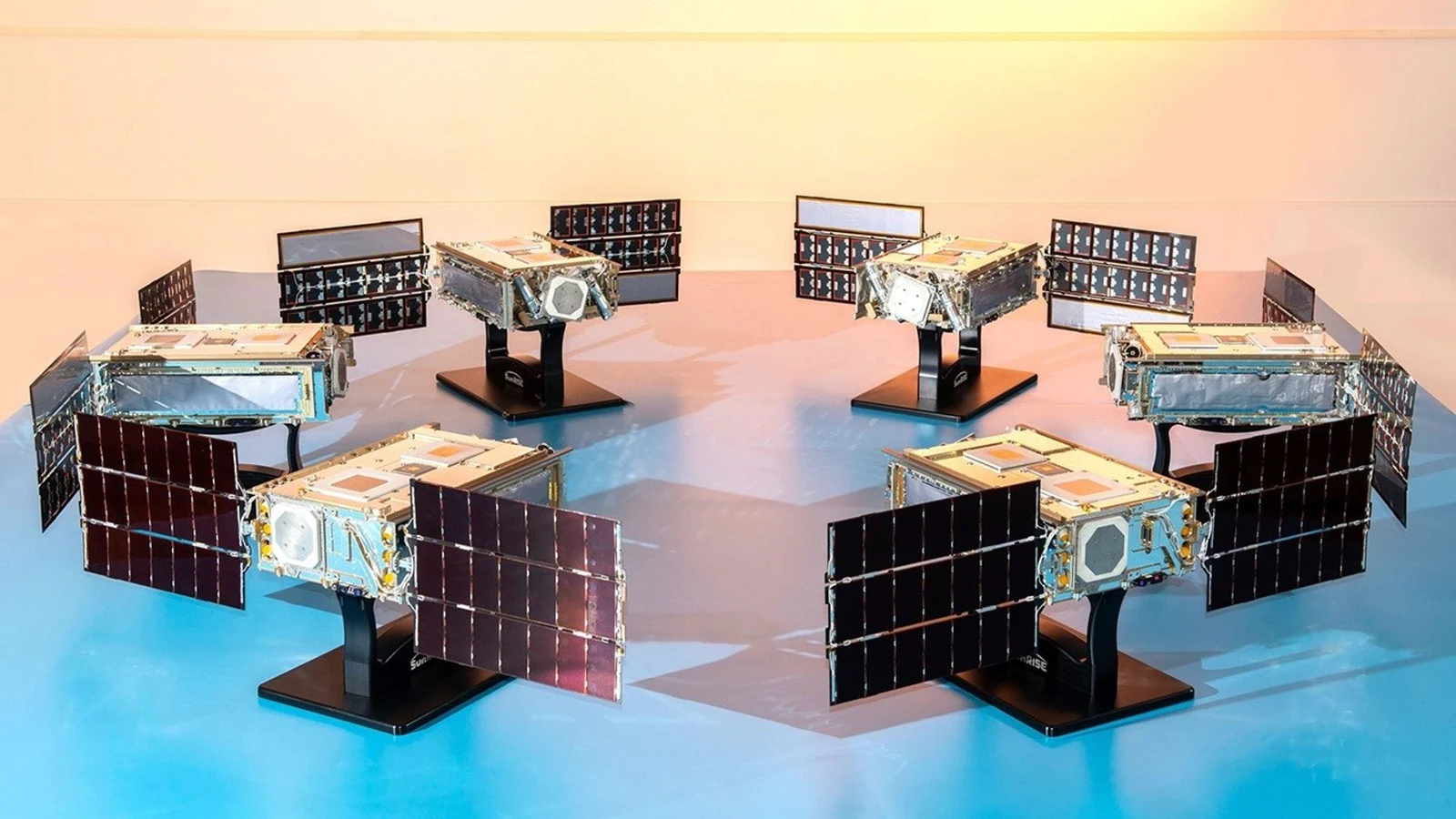
The short answer is that SunRISE is not trying to build one giant rigid antenna. NASA plans to fly six toaster-size CubeSats close together above Earth's atmosphere and use them as a coordinated radio interferometer. Each spacecraft samples the same solar event from a slightly different position. Together, those separated measurements can carry spatial information that one tiny spacecraft could not recover by itself. NASA currently describes SunRISE as a future mission with a 12-month expected duration and an objective to examine how the Sun releases particles into space.
The target is a part of the radio spectrum that ground instruments cannot simply hear through the atmosphere. NASA's technical mission record describes decametric-hectometric observations from roughly 0.1 to 25 megahertz, while the JPL mission overview explains the design problem as a need for a telescope about 10 kilometres across at the relevant wavelengths. SunRISE replaces that impossible single structure with a sparse set of receivers whose positions provide the baselines needed for an image.
The planned spacecraft are small, but the measurement is not a toy version of a radio telescope. NASA says each SmallSat will deploy four radio antennas about 2.5 metres long and that the six vehicles will fly about 10 kilometres apart. Their job is to record low-frequency emissions associated with solar activity; they will not directly scoop up the charged particles that make a radiation storm dangerous. The radio signal is a clue to where and how the energetic event is developing.
How timing turns separate signals into a map
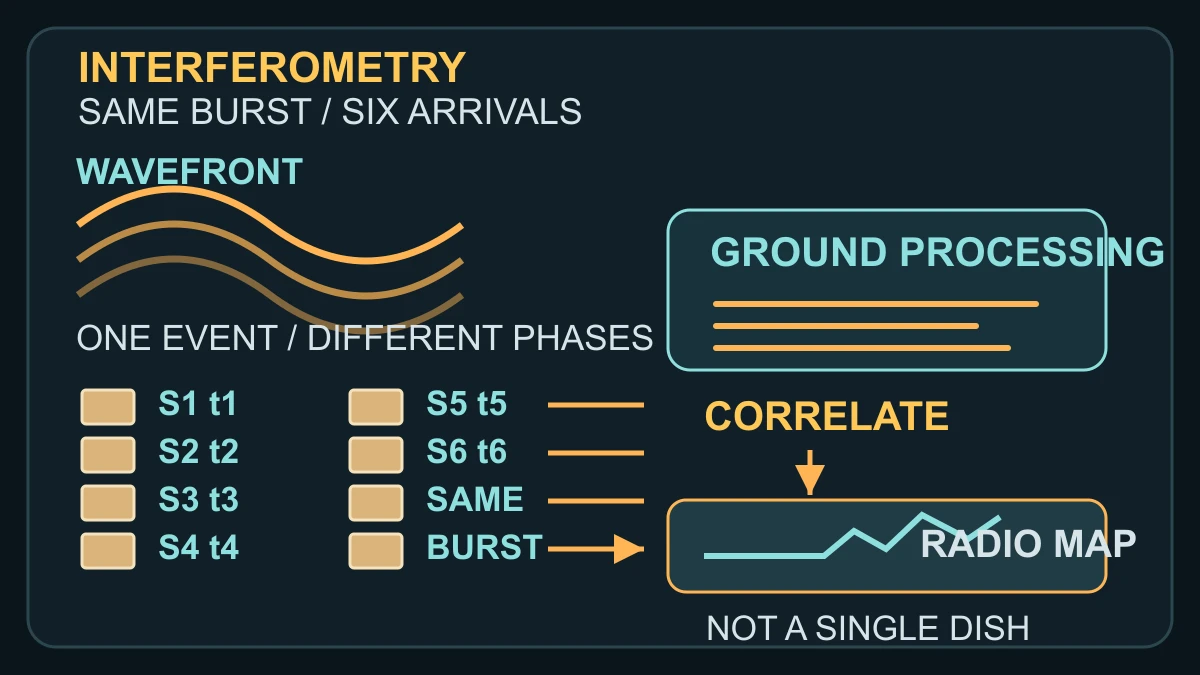
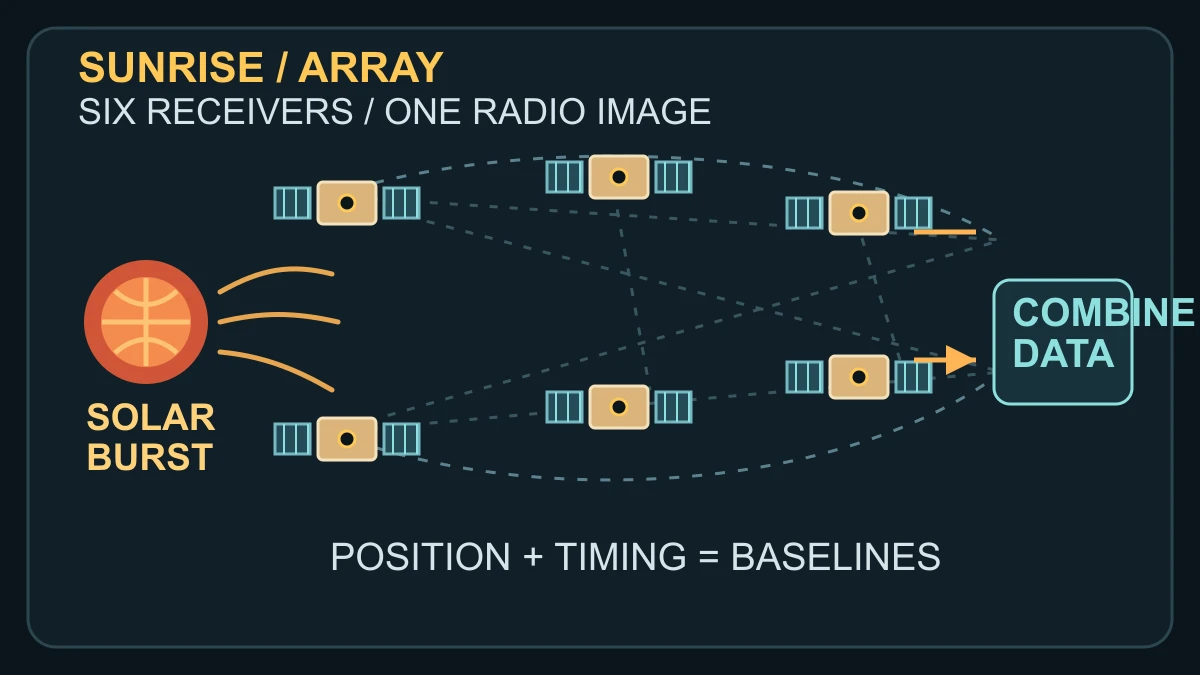
When a radio wavefront from a solar burst reaches the array, it does not arrive at every spacecraft with exactly the same phase or timing. The difference is small, but the mission can preserve it because engineers track the spacecraft positions and time the measurements precisely. NASA's detailed mission explanation says the observations will be combined on the ground; the technical record describes a passive formation in which accurate position knowledge supports the interferometric reconstruction.
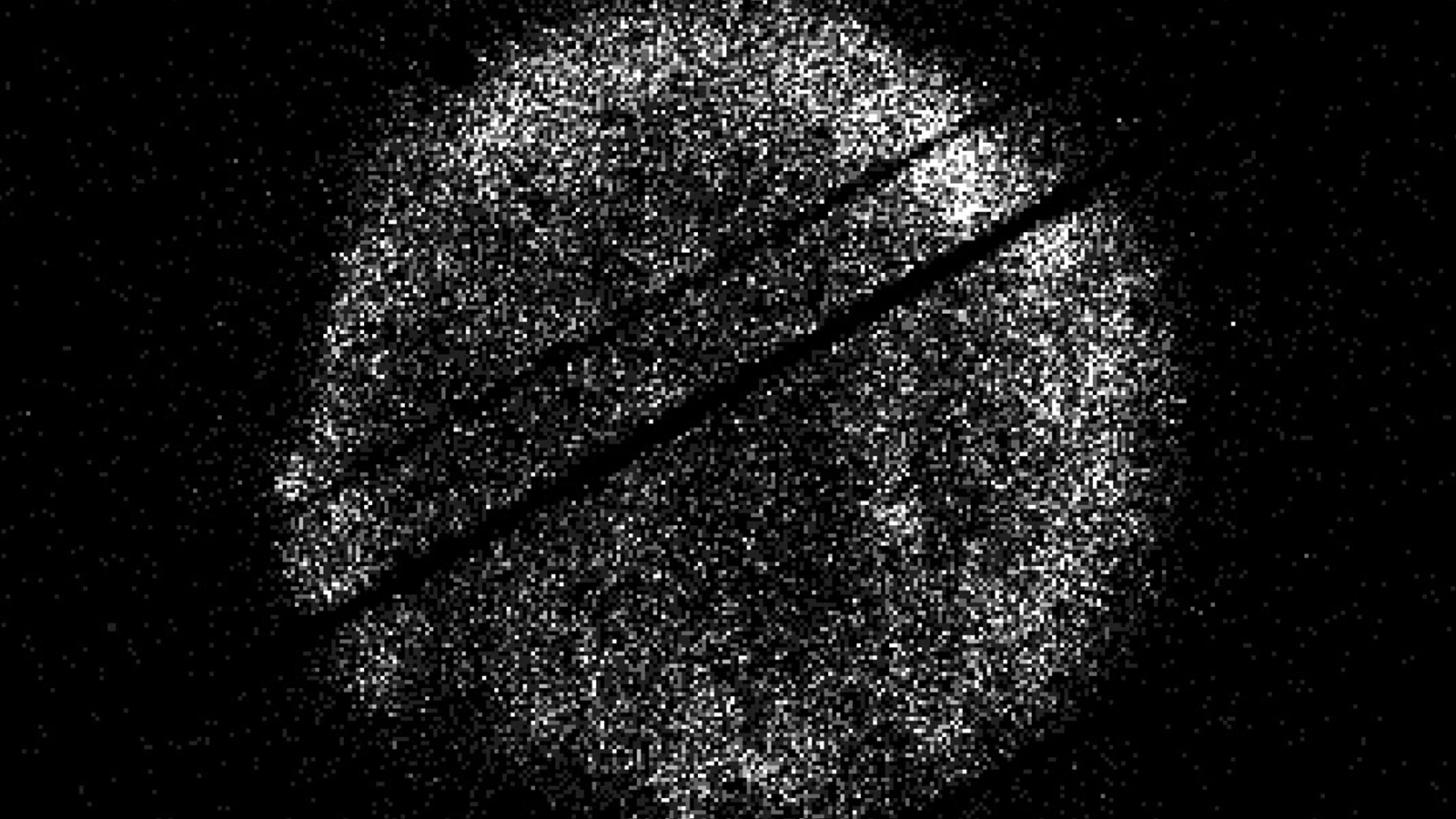
Ground processing compares the six recordings rather than treating them as six unrelated snapshots. The known geometry supplies several baselines, and the relative timing and phase of the signals constrain the direction from which the burst arrived. The result is a radio image or location map: a way to ask which part of the Sun's corona or an outward-moving eruption produced the emission. Calling this a virtual dish is useful, as long as it is not mistaken for a continuous 10-kilometre mirror.
That distinction is the heart of SunRISE's design. One spacecraft can register that a burst happened; a coordinated array can add information about where the radio emission sits relative to the larger solar event. The spacecraft therefore act as one instrument through shared measurements and ground analysis, not because they physically merge or because each individual CubeSat has the resolving power of the planned constellation.
What a radio burst can reveal—and what remains planned
Solar flares and coronal mass ejections can accelerate electrons and other particles in the Sun's atmosphere. Those processes also produce radio bursts, giving researchers an observable signal that can be compared with the expanding eruption. NASA's mission material frames SunRISE as a way to study how solar particle storms are generated and how the accelerated particles move through interplanetary space. The radio waves themselves are not the same thing as a direct count of the particles that may later threaten spacecraft or astronauts.
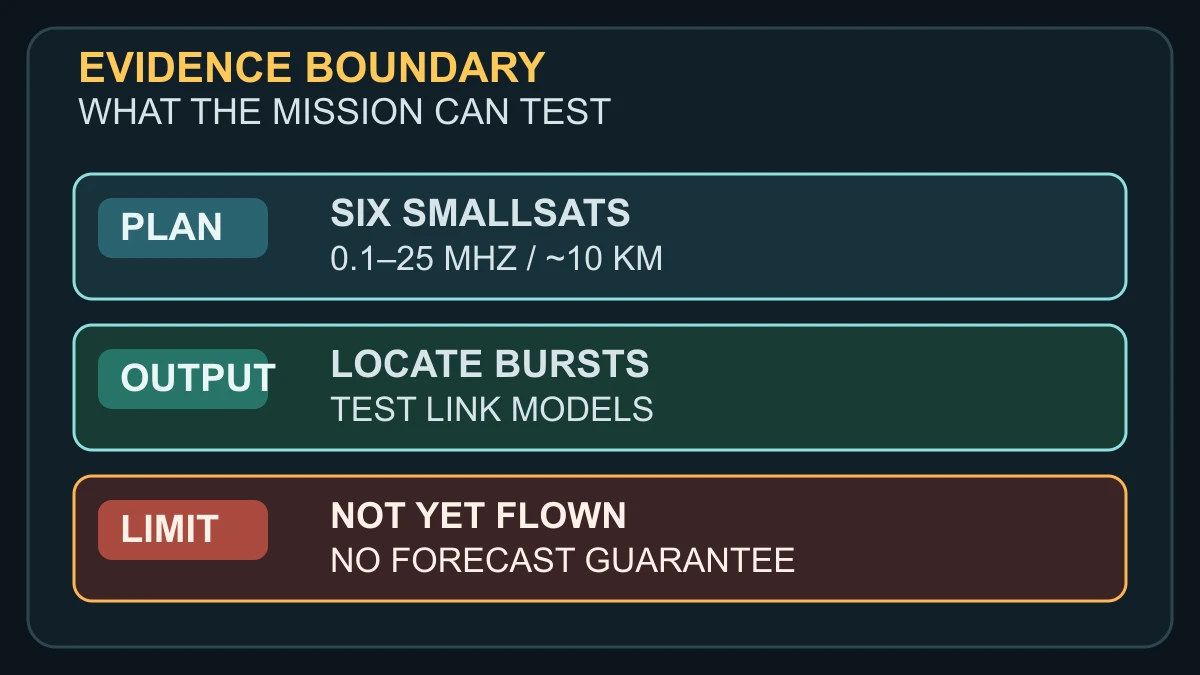
If SunRISE works as planned, locating the radio emission could test competing ideas about particle acceleration and the magnetic field paths that connect an active region to interplanetary space. A radio map might also improve the timing and physical context available to future space-weather warnings. That is a possible scientific and operational benefit, not a promise that one burst will yield a perfect forecast or that every hazardous event will be predicted in time.
The current status keeps the boundary clear. NASA's mission page lists SunRISE as a future mission with launch to be announced; the July 2026 update says the launch vehicle changed to SpaceX Falcon Heavy and that the spacecraft remain stored after assembly and testing while updated timing is prepared. No SunRISE flight observation is established here. The evidence supports a planned six-receiver method and a testable science question—not a returned radio image, a direct particle measurement or a guaranteed warning system.
Sources and further reading
- NASA Science — SunRISE mission overview ↗
- NASA Science — SunRISE changes launch vehicle to SpaceX Falcon Heavy ↗
- NASA Science — SunRISE SmallSats ace tests, moving closer to launch ↗
- NASA/JPL — NASA's 6-Pack of Mini-Satellites Ready for Their Moment in the Sun ↗
- NASA JPL — SunRISE: Monitoring Solar Radiation Storms From Space ↗
- NASA Technical Reports Server — The Sun Radio Interferometer Space Experiment Mission ↗
- NASA Science Photojournal — Completed SunRISE SmallSats Pictured Together ↗
- NASA — Guidelines for using NASA Images and Media ↗
This article was written for Curiosity Desk. We do not copy other publishers or invent quotes. If a material error is found, we correct it openly.
Read the full standards →One answer should lead to a better question
Bring your curiosity to the group
Curious Minds is our public Facebook community for surprising science, strange history, Australian wildlife and everyday questions. No copied posts, no personal-friend invitations and no link dumping.
- Three self-contained discussion prompts each week
- Sourced answers and honest uncertainty
- Respectful conversation without spam