What does an electron-acceleration map need to show?
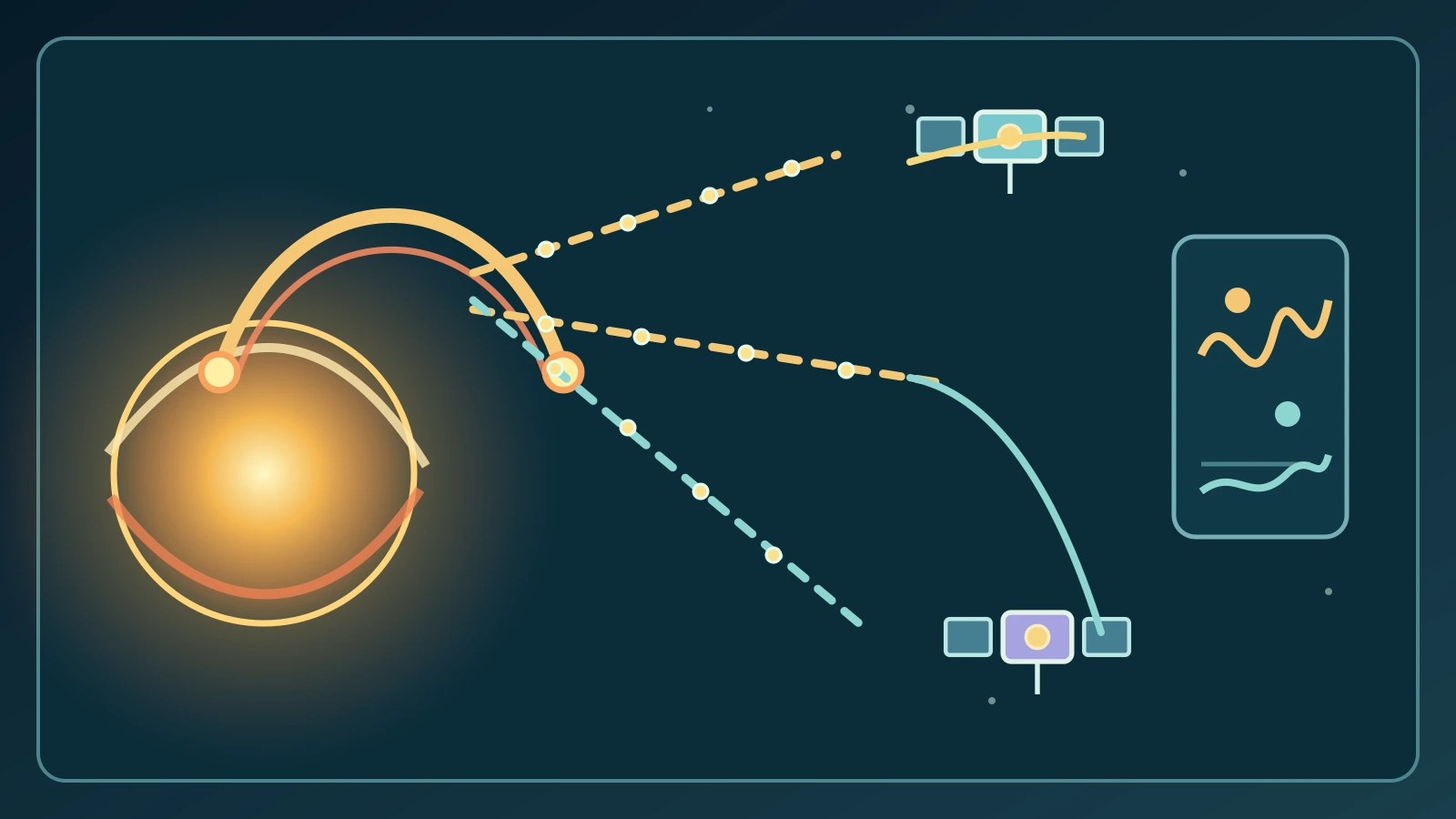
A small spacecraft cannot photograph the place where a flare electron gains energy. It can, however, help trace that place by measuring the hard X-rays made when energetic electrons interact with plasma, then comparing the signal's energy and direction. The useful output is therefore an evidence map: which energies appeared, from which viewing angles, and with what relationship to the flare and its magnetic environment.
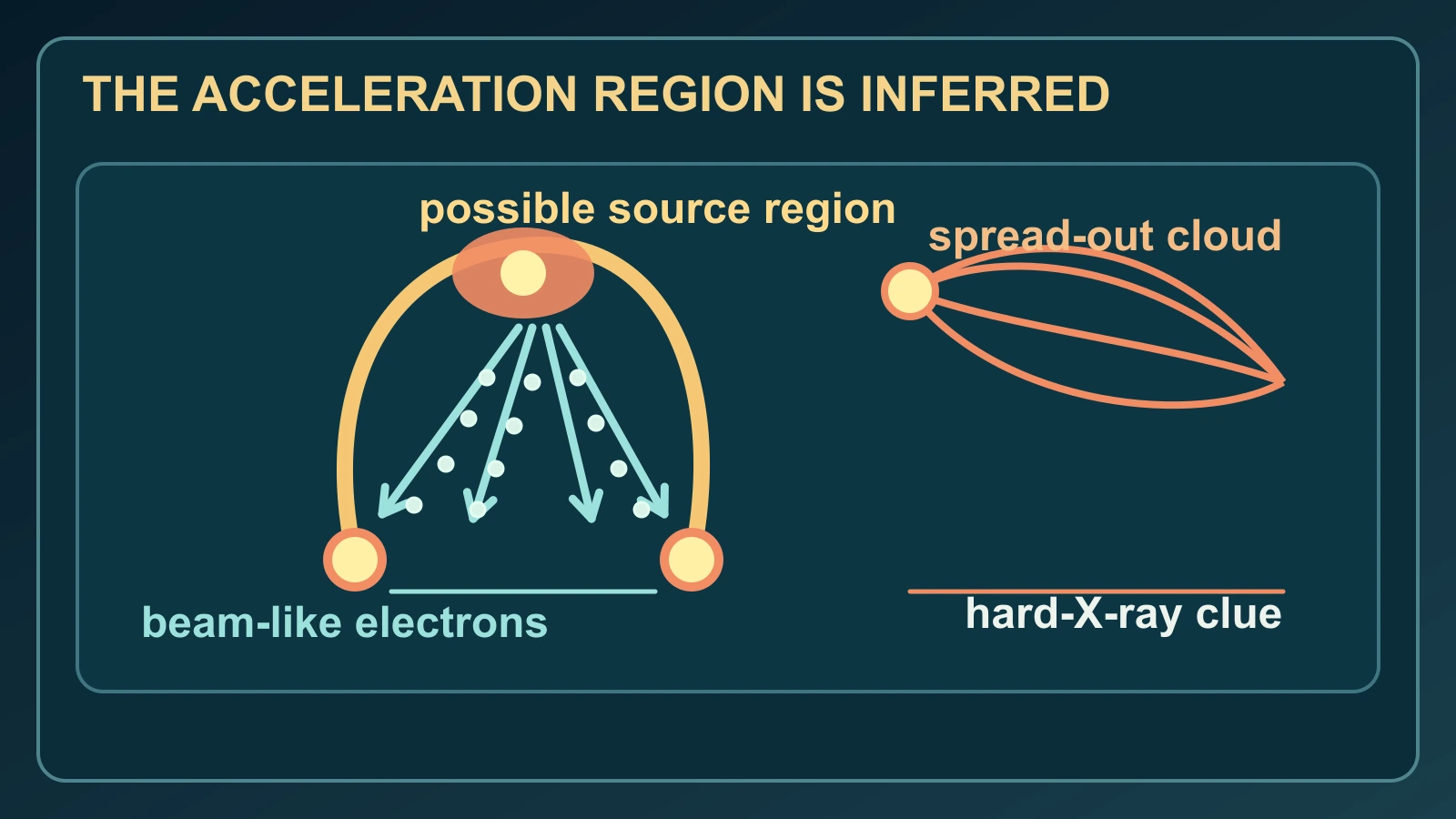
That distinction is the key to PADRE. The mission asks whether flare-accelerated electrons travel more like a collimated beam along magnetic-field structure or more like a broad, quasi-isotropic cloud. Those alternatives would leave different signatures in hard-X-ray directivity and polarization. A result can narrow the physical picture without drawing a literal boundary around the acceleration site.
The first step is to keep three things separate: the region where energy is released, the electrons after they are accelerated, and the X-ray photons that carry an indirect record of their interaction with plasma. The diagram above is a teaching schematic, not a measured solar map.
How do hard X-rays carry clues about energetic electrons?
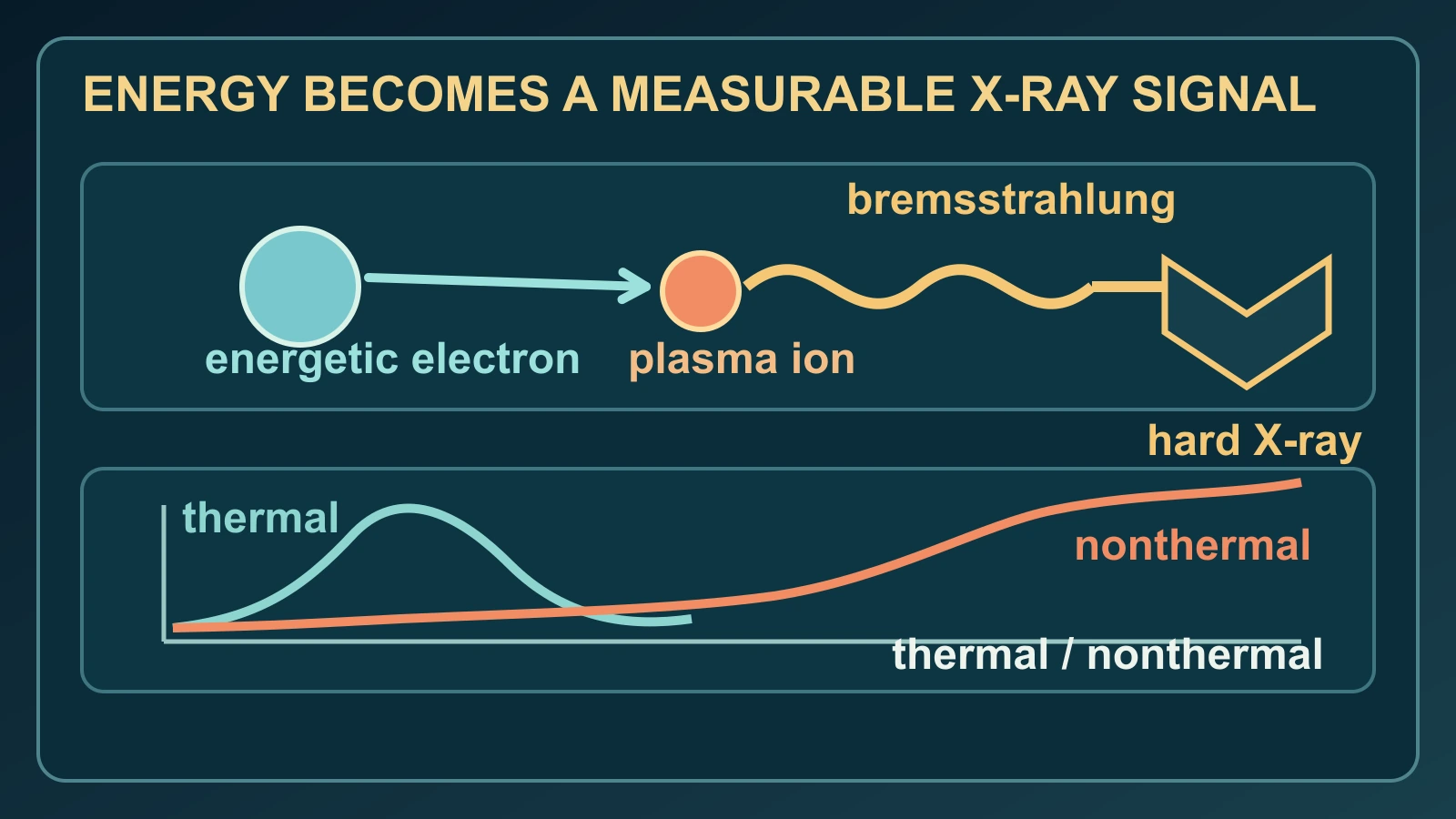
In a flare, some electrons remain part of the hot thermal plasma while another population is accelerated to much higher energies. As those energetic electrons slow down or change direction near charged particles, they emit bremsstrahlung: hard-X-ray photons whose spectrum carries information about the electron population that produced it.
Scientists fit the observed spectrum rather than treating every photon as a direct electron count. The shape and timing of the signal help separate thermal emission from a nonthermal component, estimate the energy carried by accelerated electrons and compare the hottest plasma with the flare's other emissions. Hard X-rays are therefore a tracer, not a photograph.
The distinction matters because the strongest flare sources can outshine fainter coronal or CME-associated emission. Imaging and spectroscopy have to be combined carefully: a spectrum says what energies are present, while a location or a second viewpoint helps test where that emission belongs.
How can two viewpoints reveal directivity?
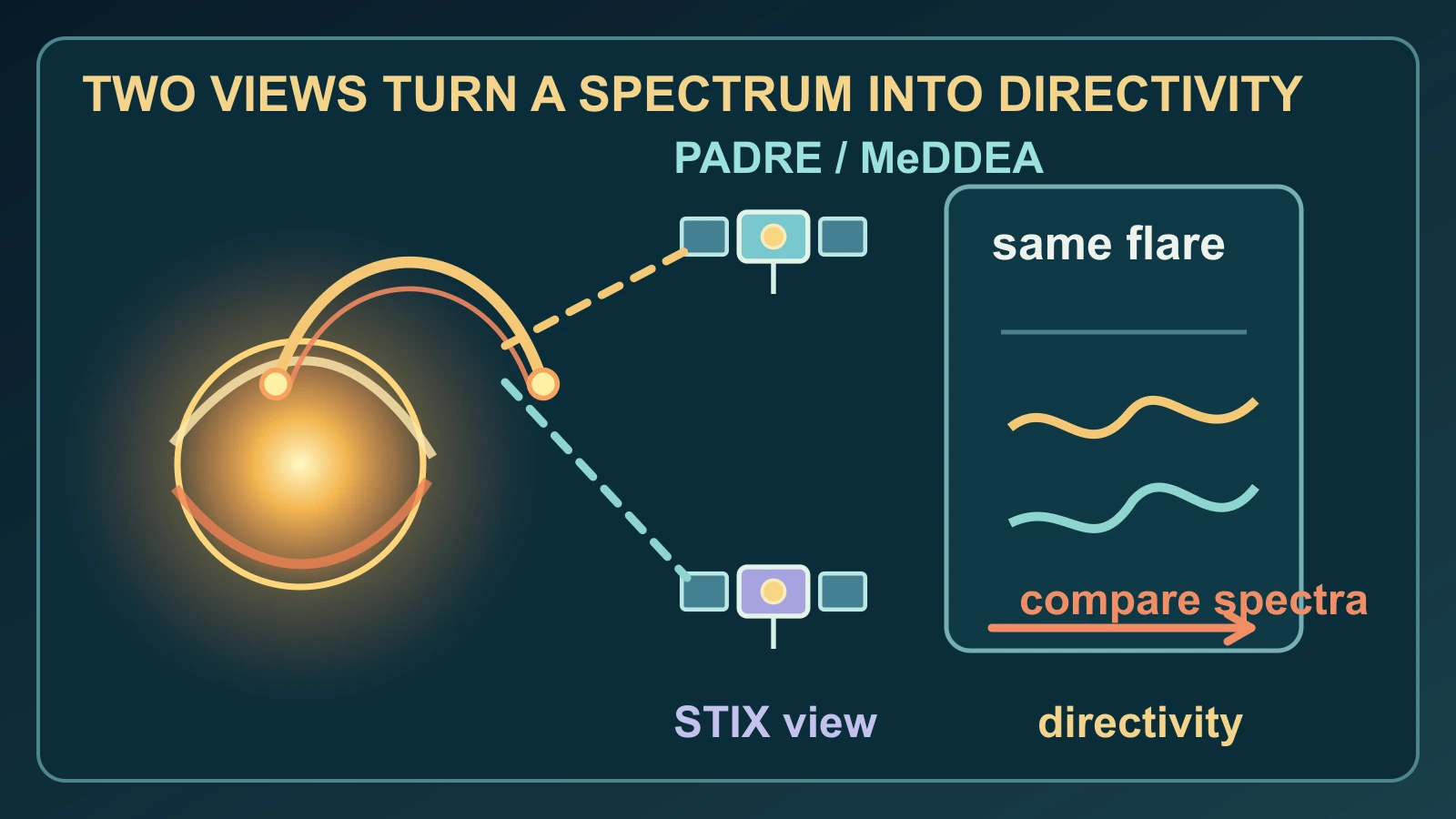
MeDDEA's central trick is stereoscopic spectroscopy. PADRE measures the flare's hard-X-ray signal from Earth orbit, while Solar Orbiter's STIX can see the same event from a different angle. Comparing calibrated photon spectra from the two viewpoints tests whether the radiation is stronger in some directions than others—a property called directivity.
The geometry can also make a faint component easier to isolate. In the first-results study, STIX saw the 28 November 2025 M6 flare from about 15 degrees behind the solar limb, so the bright lower flare was hidden from that viewpoint while MeDDEA saw the full event. STIX and AIA imaging then placed the measured high-coronal hard-X-ray emission within the associated CME.
PADRE adds a second, complementary clue. SHARP measures hard-X-ray polarization as the spinning spacecraft records how photons scatter through its detector assembly. Together, directivity and polarization can constrain the angular distribution of the electrons more strongly than either measurement alone, provided a suitable flare and viewing geometry are available.
What has PADRE measured—and what remains open?
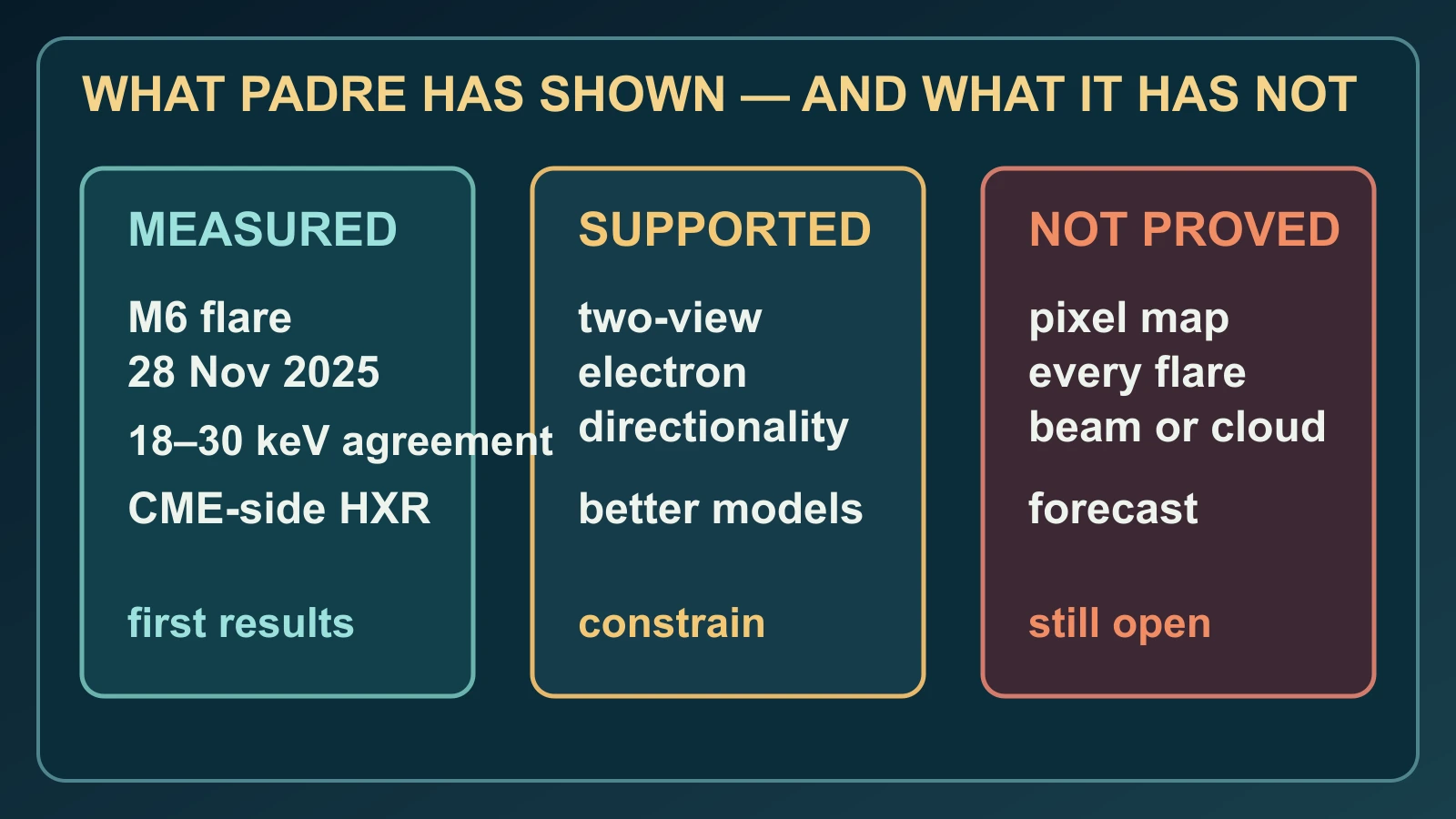
PADRE is no longer only a proposed technology. NASA reports that the CubeSat launched on 23 June 2025, that all four MeDDEA detectors are operating on orbit and producing science data, and that the instrument has reached the highest technology-readiness level. The first published MeDDEA study found agreement with Fermi/GBM and ASO-S/HXI within 10% over 18–30 keV for the reported comparison.
Those results establish that the compact instrument can produce scientifically useful spectra and that a second viewpoint can expose hard-X-ray emission associated with a CME. NASA's new HESTO update describes the next step: adapting the MeDDEA architecture for AWSEM, a lunar-surface instrument selected for a future mission with a planned flight-readiness date at the end of 2027.
What remains open is the larger physics question. A single event does not settle whether flare electrons generally form beams or clouds, and a directivity constraint is not a pixel-level map of the acceleration region. Nor does PADRE alone forecast a solar storm. Its value is more precise: it gives researchers another measured angle on how magnetic energy becomes energetic particles, so future observations can test the models rather than merely illustrate them.
Sources and further reading
- NASA HESTO — From CubeSat to the Moon: PADRE/MeDDEA Tech Finds New Home in AWSEM ↗
- Stiefel et al. — First results from PADRE/MeDDEA: X-rays from a flare and its CME ↗
- PADRE mission overview — MeDDEA stereoscopic spectroscopy and SHARP polarization ↗
- PADRE instruments — SHARP and MeDDEA detector architecture ↗
- NASA Heliophysics — Why study solar flares in hard X-rays? ↗
- NASA — Guidelines for using NASA images and media ↗
This article was written for Curiosity Desk. We do not copy other publishers or invent quotes. If a material error is found, we correct it openly.
Read the full standards →One answer should lead to a better question
Bring your curiosity to the group
Curious Minds is our public Facebook community for surprising science, strange history, Australian wildlife and everyday questions. No copied posts, no personal-friend invitations and no link dumping.
- Three self-contained discussion prompts each week
- Sourced answers and honest uncertainty
- Respectful conversation without spam