What the released dataset contains
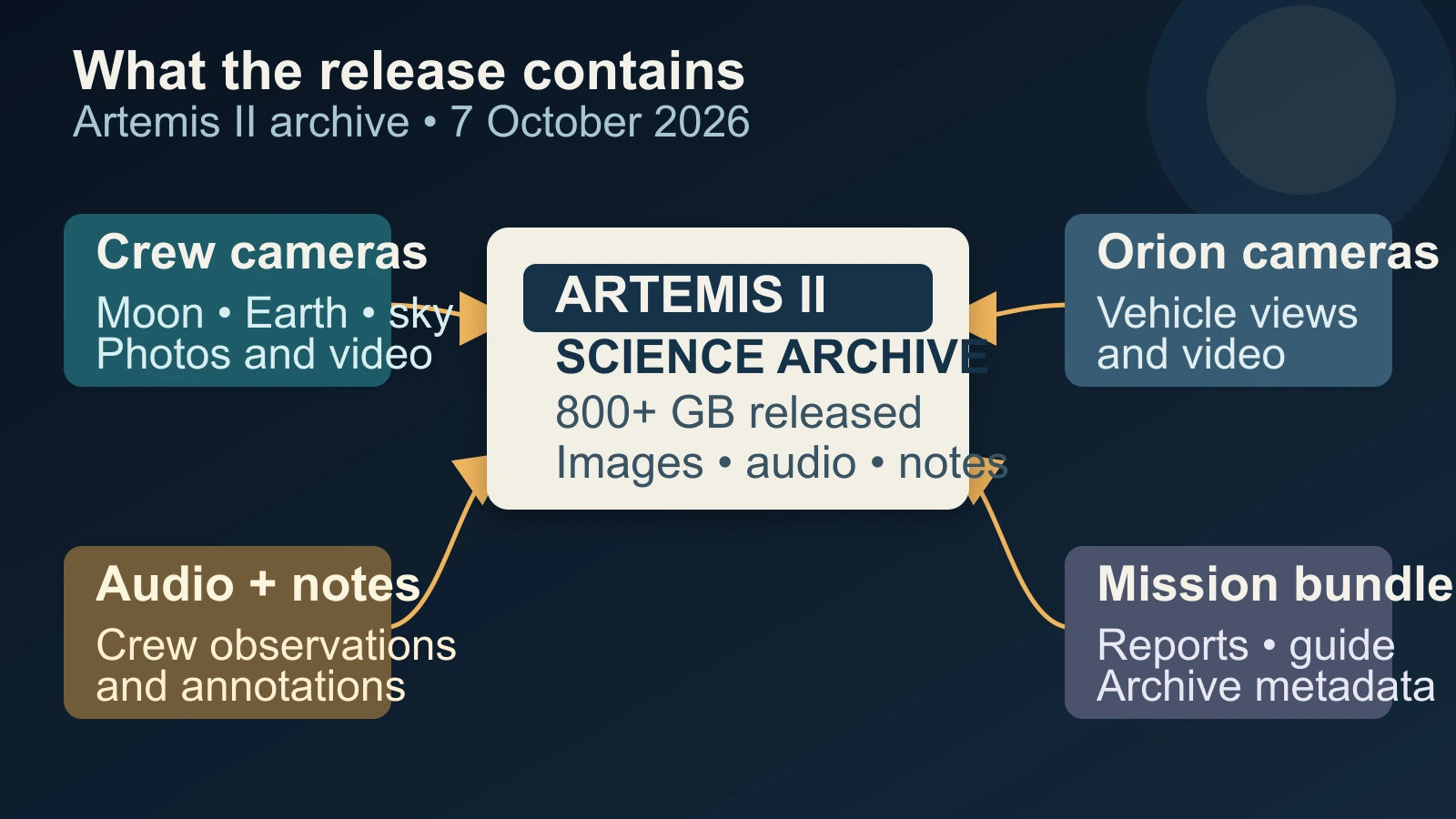
The short answer is that Artemis II did not return only a folder of pretty Moon photographs. NASA's October 2026 release and the Planetary Data System archive describe a linked collection of crew handheld-camera images, Orion vehicle-camera images and video, mission audio, transcripts, crew annotations and mission documents. The PDS record also lists Orion storage-locker temperature and humidity data as a separate environment bundle. NASA's public release describes more than 800 gigabytes of data, more than 11,000 full-resolution images and video, and 8.5 hours of audio recordings.
That mixture matters because each part carries a different kind of information. A picture shows what the camera recorded. Audio preserves what a crew member noticed and said in the moment. An annotation can point to a faint flash, a colour boundary or a feature that deserves a closer look. Mission documents and archive labels tell later users which product they are looking at and how it belongs to the flight. The result is a scientific record with the observation and its context kept close together, rather than an image separated from the reason it was taken.
How a crew observation becomes a record
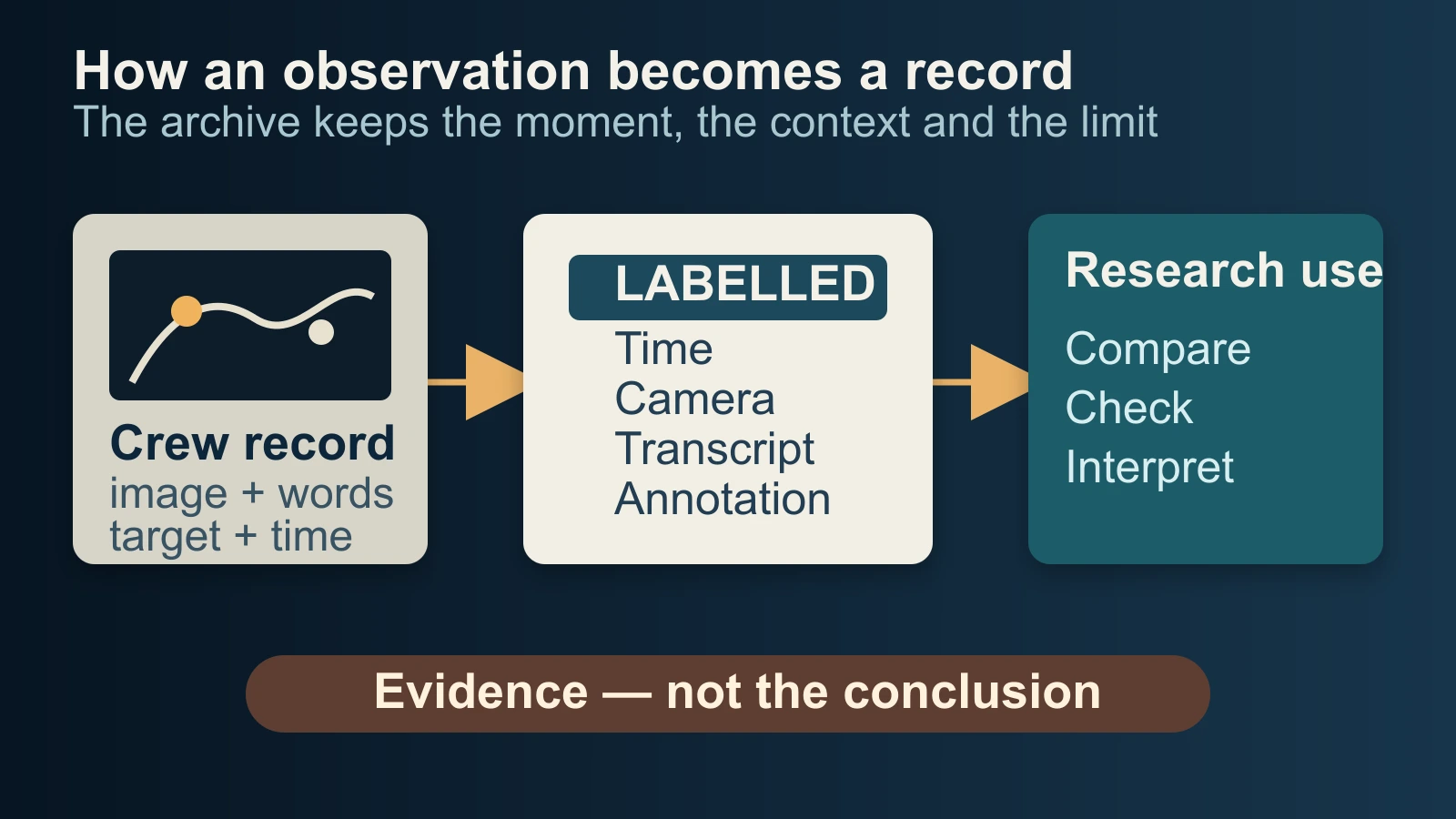
During the lunar flyby, the crew rotated through observation periods, selected targets, aimed cameras, recorded descriptions and added notes or drawings. That human choice is part of the dataset. The crew did not simply point an identical instrument at every square kilometre of the Moon; they responded to lighting, timing and what they could recognise through Orion's windows. NASA's preliminary report describes photographs, spoken observations, drawings and annotations as one combined record now available for further study.
For a later researcher, the useful unit is not just one image. It is the image alongside its time, camera, target area, associated words or annotation and the documentation that explains the archive bundle. The PDS separates the crew-camera, Orion-camera, mission-audio and mission-document products, then provides a user guide and archive identifiers so those pieces can be found and cited. That structure turns an in-flight moment into a reproducible record: another person can inspect the same file, read the same note and understand what the archive says about its origin.
The boundary is important. A labelled record tells us what was captured and how it was filed. It does not mean the first interpretation written beside it is already a final scientific conclusion. Interpretation comes after comparison, checking and often a later paper or dataset.
Why annotations and metadata matter
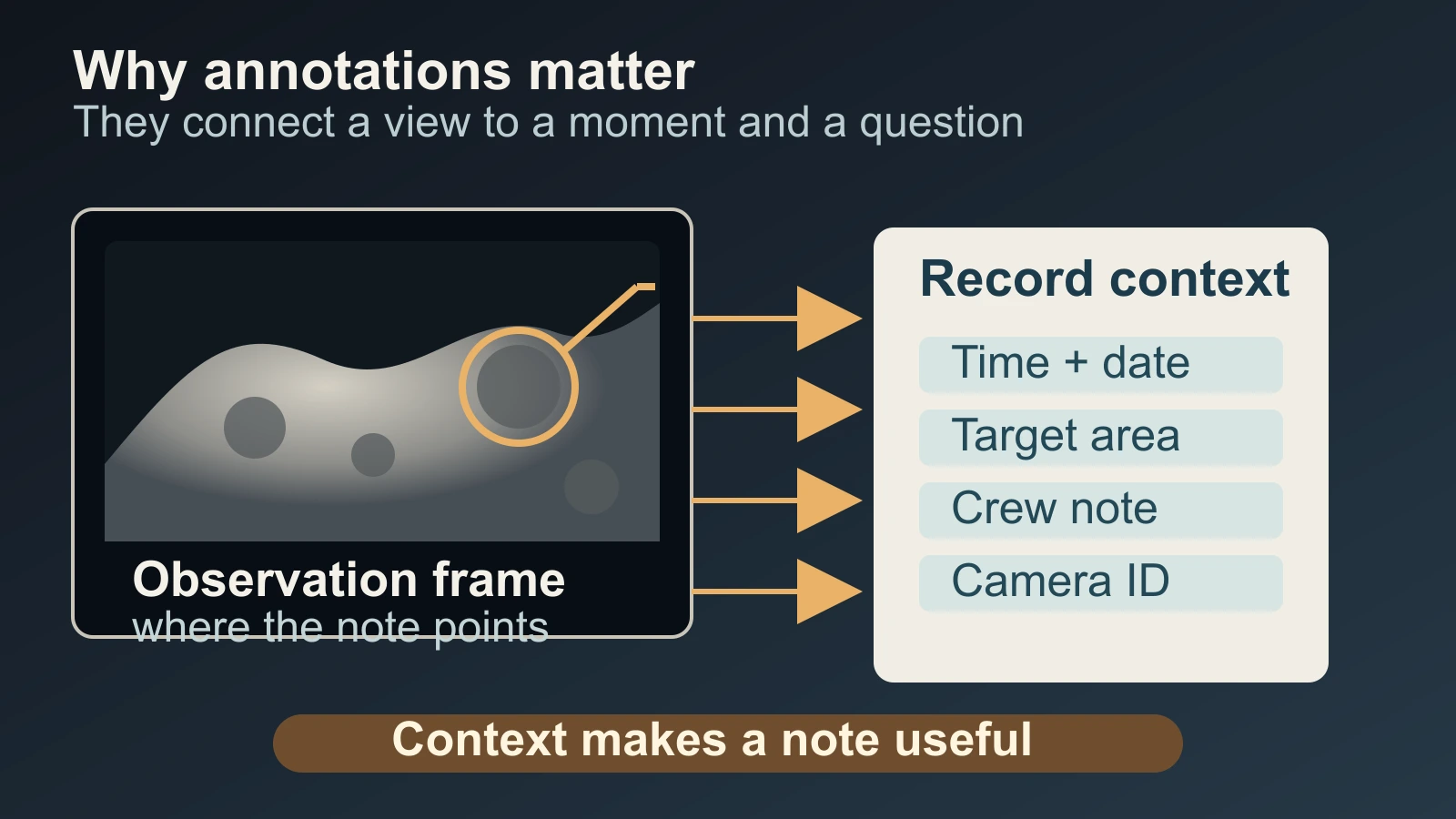
A photograph contains detail, but it does not automatically tell a reader which detail mattered to the observer. The Artemis II crew's notes and spoken observations add that missing question. They can record a subtle colour, a changing shadow, a bright flash or a structure that became noticeable only while the spacecraft was moving past the Moon. Those choices are not a replacement for instruments; they are a record of where trained observers directed attention and what they perceived under particular lighting.
NASA's report gives a concrete example in the tiny flashes seen during the lunar eclipse. Crew members marked several flashes and their approximate locations. The science team then compared the reports with other possibilities, including cosmic rays and reflections from the spacecraft, before confirming the sightings as impact flashes. The strength of the story comes from the chain: observation, location, timing, competing explanations and team review. A note without its timing and target context would be much harder to test.
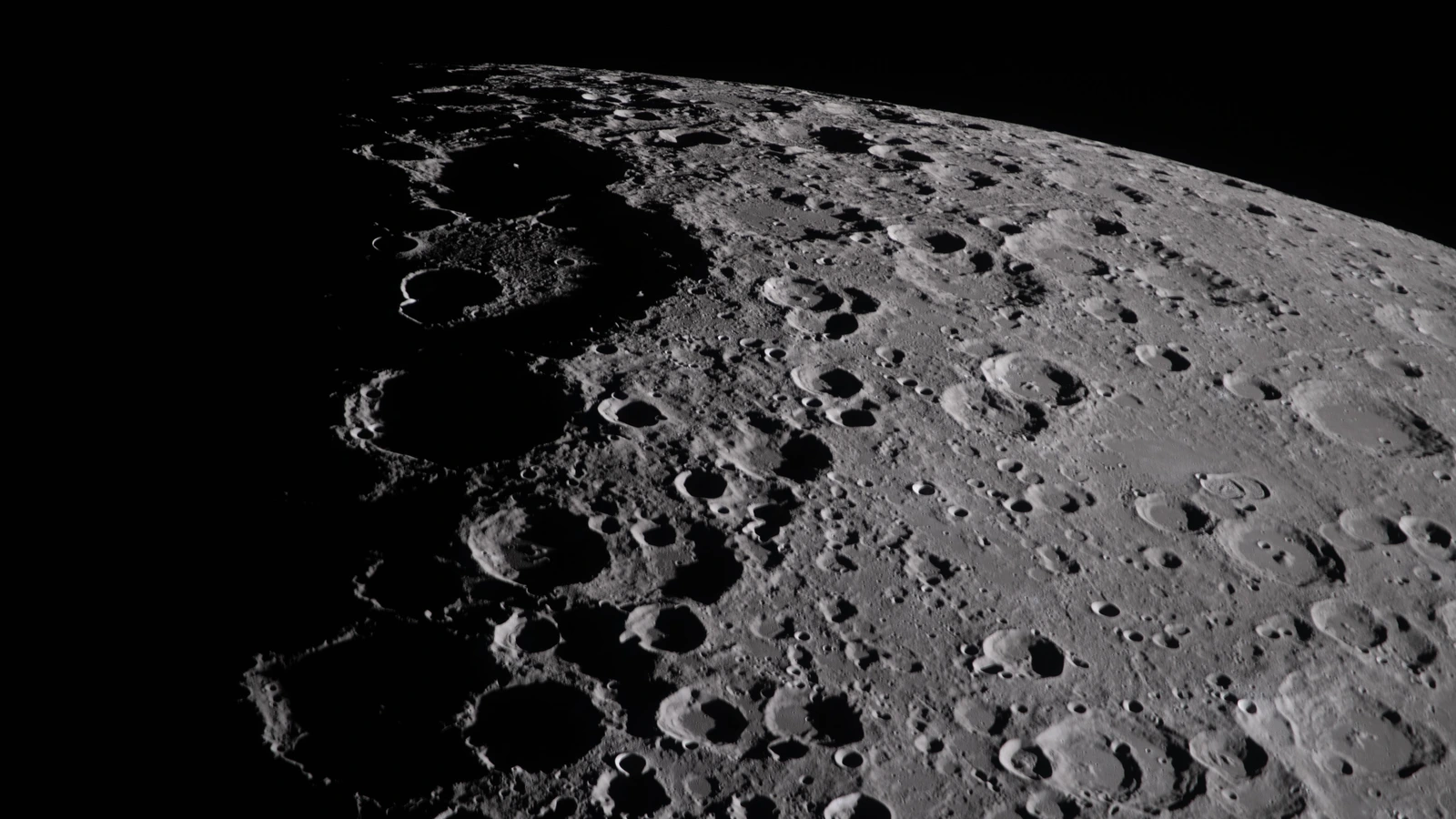
The same logic applies to colour and terrain. NASA says the crew's handheld images and observations can be compared with Lunar Reconnaissance Orbiter data, while also warning that viewing angle and extreme lighting change how the surface appears. Metadata therefore does more than help organise files. It lets scientists separate a feature in the Moon from a feature introduced by illumination, camera settings or human perception.
What the archive can and cannot prove
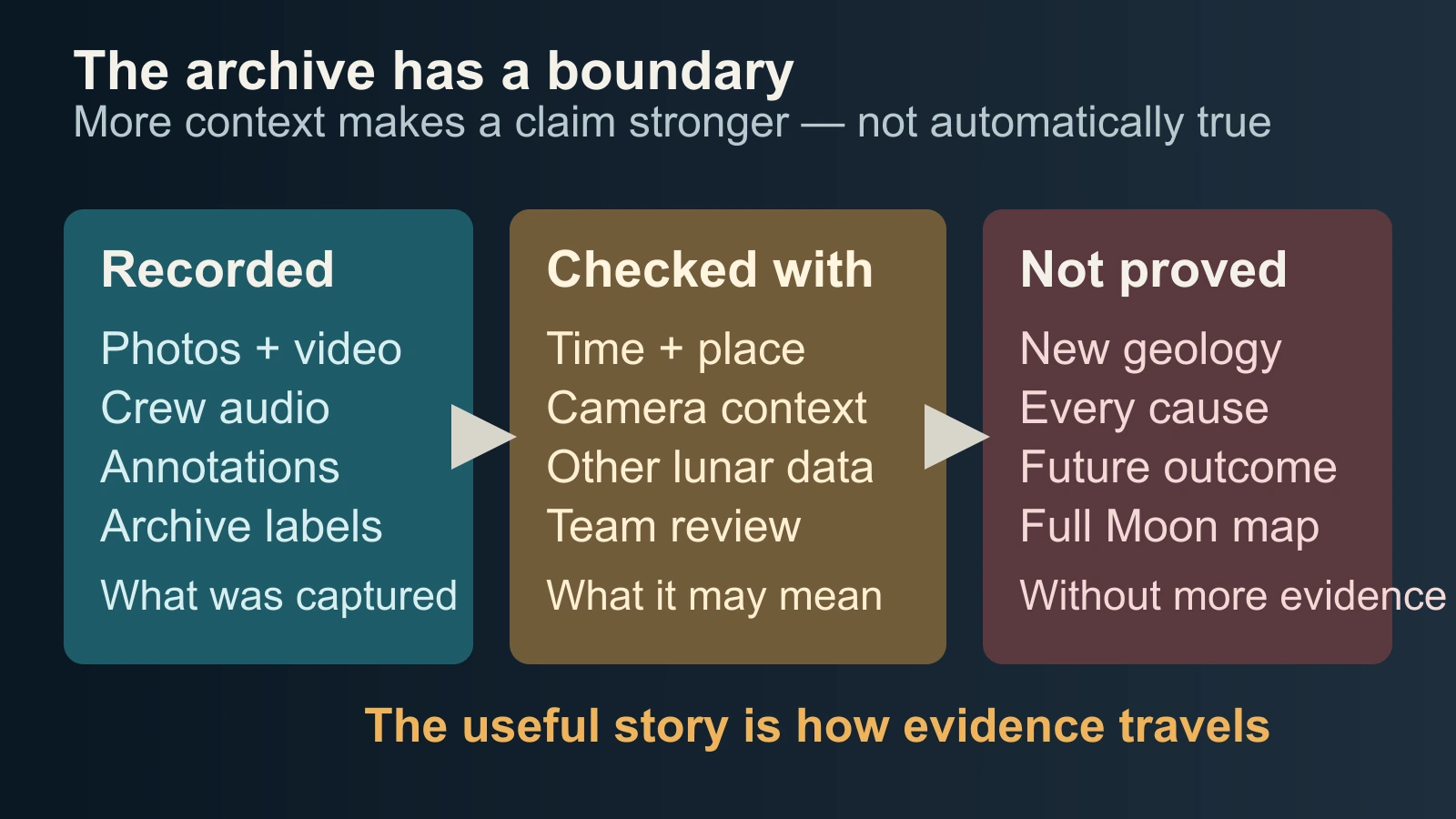
The released archive establishes that Artemis II collected and published a substantial set of human-guided lunar observations, images, audio, annotations and mission records. It gives scientists material to study how people recognise lunar features from deep space, how low-angle light changes what is visible and how crew observations can complement robotic measurements. NASA says those lessons can inform future Artemis missions, including decisions about cameras, aiming and the level of detail needed near the lunar South Pole.
It can support new questions and more carefully tested interpretations. It cannot, by itself, turn every crew note into a geological discovery, establish the complete history of a crater, or prove how often a rare event occurs from one short observing window. Nor does a preliminary report erase the difference between a recorded perception and a later peer-reviewed result. The PDS page also describes distinct archive bundles and notes that the SPICE bundle was delayed on the checked release page, a reminder that a public data release can still have an explicit boundary.
The useful conclusion is more precise than either 'the astronauts took pictures' or 'the astronauts solved lunar science.' Artemis II added human timing, target choice, language and annotation to a structured archive. That extra context makes the images more testable and more valuable—but only when the record travels with its limits.
Sources and further reading
This article was written for Curiosity Desk. We do not copy other publishers or invent quotes. If a material error is found, we correct it openly.
Read the full standards →One answer should lead to a better question
Bring your curiosity to the group
Curious Minds is our public Facebook community for surprising science, strange history, Australian wildlife and everyday questions. No copied posts, no personal-friend invitations and no link dumping.
- Three self-contained discussion prompts each week
- Sourced answers and honest uncertainty
- Respectful conversation without spam