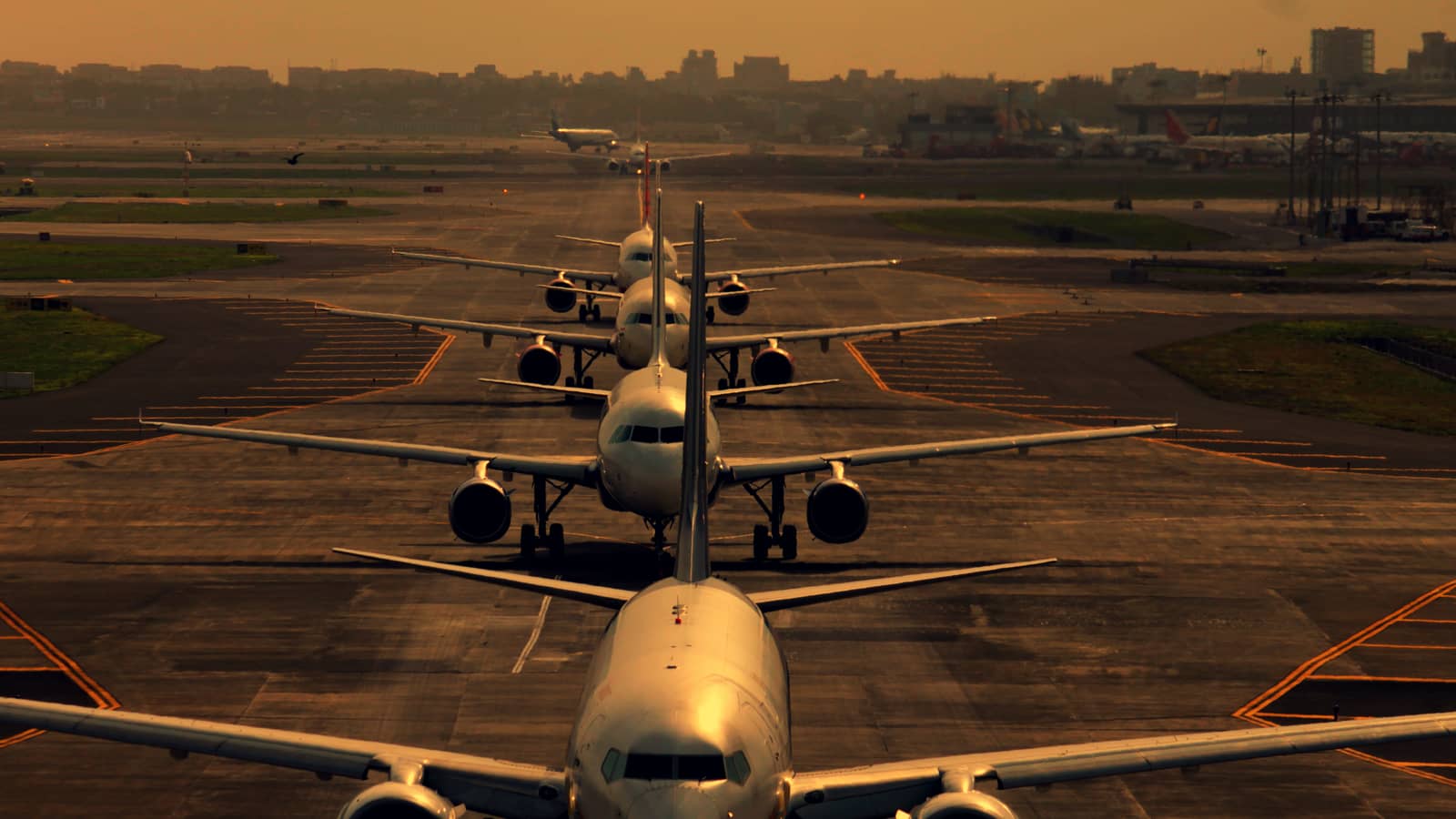
The safest waiting room is still on the ground
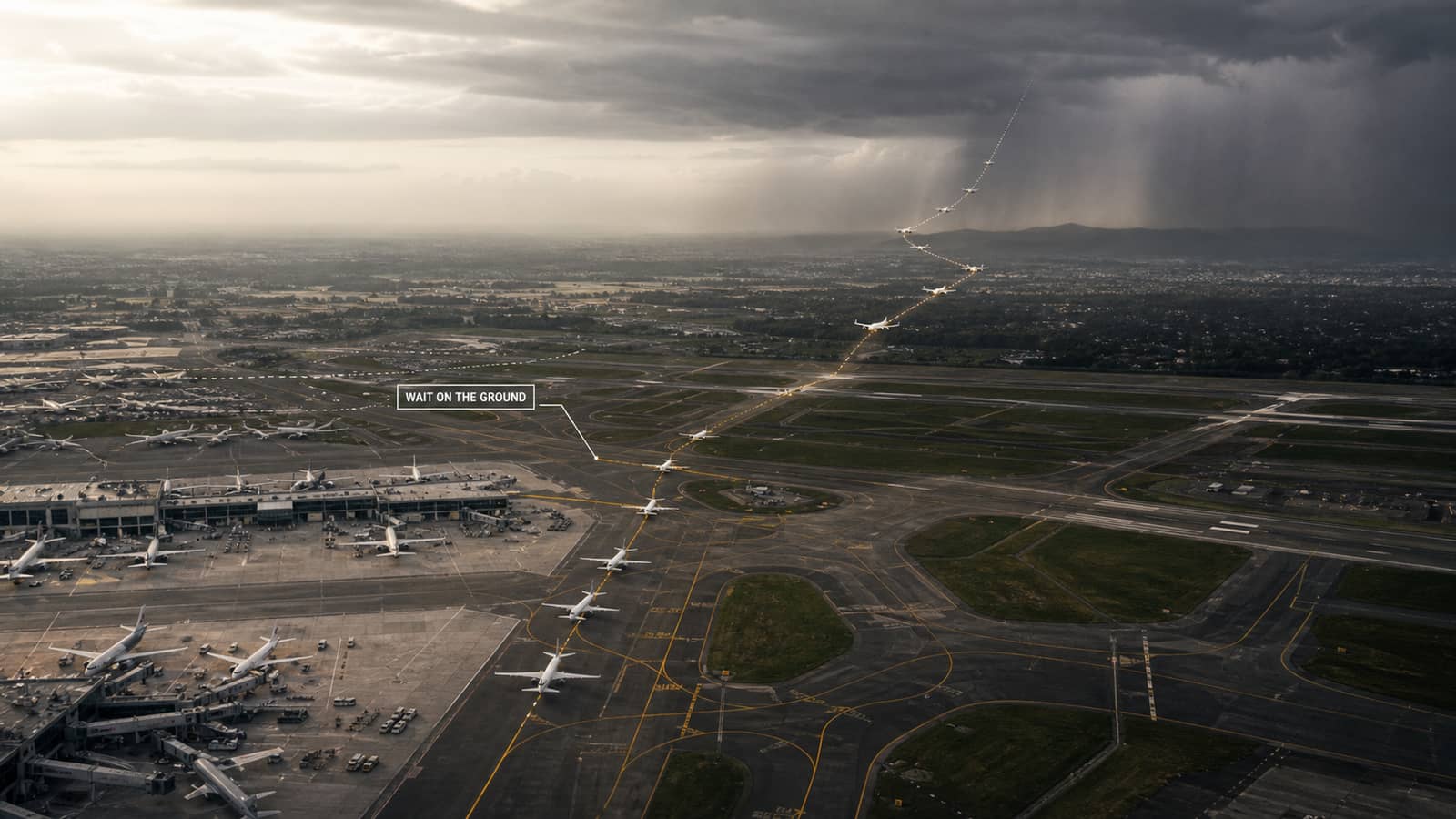
A ground stop begins with a mismatch: more aircraft are expected to reach an airport than that airport can accept safely for a short period. The limiting number is the airport acceptance rate, the flow of arrivals the system can handle in an hour. Weather can cut that rate by reducing visibility, changing runway use or increasing the spacing needed between aircraft. Equipment trouble or another temporary constraint can also reduce it, sometimes all the way to zero.
The Federal Aviation Administration's answer is deliberately upstream. Flights covered by the stop remain at their departure points instead of taking off and joining an airborne queue near the destination. The aircraft may be hundreds or thousands of kilometres from the problem airport. Holding it there preserves fuel, keeps the destination airspace manageable and gives traffic managers a place where the delay can be measured rather than improvised in flight.
That is why 'ground stop' does not automatically mean the destination airport has closed. Other arrivals may still be accepted, departures may continue, and flights outside the stop's criteria may operate. The measure targets traffic bound for the constrained airport under the terms set by the traffic-management authority. The visible result for a passenger is simple—a gate delay—but the system problem is an arrival queue that has not yet formed.
One bottleneck reaches backwards through many airports
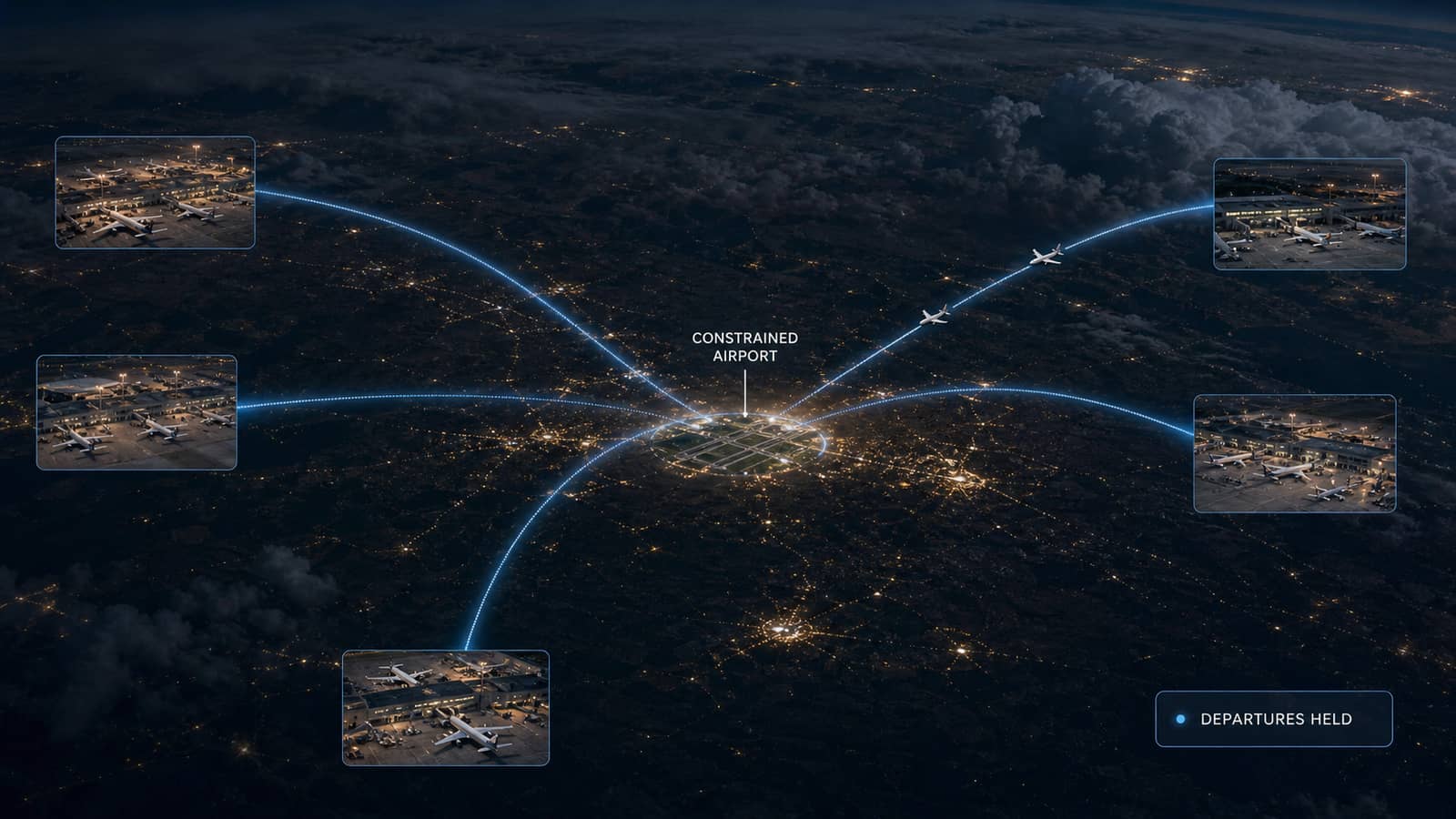
Imagine an airport can usually accept 50 arrivals in an hour, but fog temporarily reduces that figure to 20. If 50 flights still depart on schedule, the missing capacity does not disappear. It becomes holding patterns, reroutes, diversions or unsafe pressure on controllers and runways. A ground stop prevents that excess demand from travelling. Each origin airport holds its affected flight, so one destination bottleneck appears on departure boards across the network.
The measure is intentionally blunt because it is normally used for a short-lived problem or as breathing room while a longer plan is built. FAA guidance says a ground stop can control demand when it is expected to exceed acceptance rate briefly, temporarily stop traffic while a Ground Delay Program is prepared, or respond when acceptance rate falls to zero. In every case, the essential move is the same: pause the inflow before it becomes airborne.
This also explains why the airline at your gate may not control the release time. Dispatchers, airports, controllers and the FAA exchange demand and capacity information, but a covered aircraft cannot simply leave because boarding is complete. A takeoff that looks harmless at the origin becomes another timed arrival at the constrained destination. Network safety depends on treating those two moments as parts of one system.
The stop can end before the delay disappears
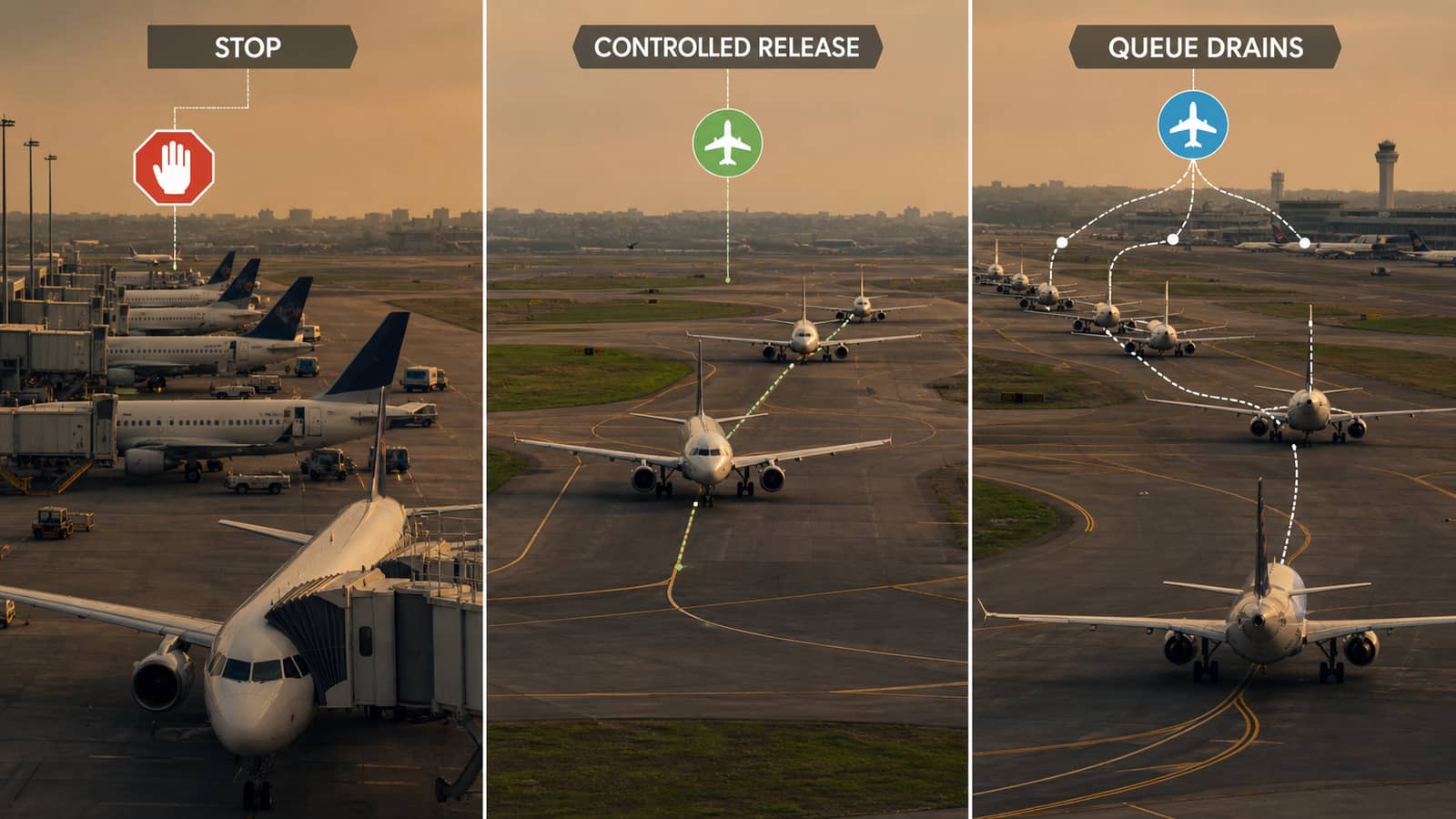
When conditions improve, traffic managers may cancel the stop, extend it or replace it with a Ground Delay Program. The names describe different tools. A ground stop holds covered flights for the duration of the stop. A Ground Delay Program meters flights using expected departure clearance times so arrivals match the reduced acceptance rate over a longer period. It turns a complete pause into a controlled sequence rather than instantly releasing every waiting aircraft.
Even a cancelled stop leaves a physical backlog. Crews may approach duty limits, aircraft may be out of position, gates may still be occupied and connecting passengers may have missed their next flights. Several aircraft that were due to use the same runway or gate cannot all reclaim the same minute. Airlines rebuild their schedules while the FAA rebuilds the arrival flow, so the operational recovery can outlast the original weather cell or equipment problem.
For a traveller, the useful question is therefore not only 'Has the ground stop ended?' It is also 'Has my flight received a new release plan, and is the aircraft and crew ready?' The phrase on a status screen describes a traffic-management action, not a promise about one itinerary. Its real purpose is less dramatic than an airport shutdown and more important: move the waiting line to the place where it can be managed safely.
The distinction also clarifies apparently contradictory updates. An airline can truthfully say that an airport remains open while a passenger is truthfully told their flight is under a ground stop. The first statement describes the facility; the second describes a traffic stream. Watching both the destination conditions and the flight-specific release information gives a better picture than treating one system-wide label as a countdown clock.
Sources and further reading
This article was written for Curiosity Desk. We do not copy other publishers or invent quotes. If a material error is found, we correct it openly.
Read the full standards →One answer should lead to a better question
Bring your curiosity to the group
Curious Minds is our public Facebook community for surprising science, strange history, Australian wildlife and everyday questions. No copied posts, no personal-friend invitations and no link dumping.
- Three self-contained discussion prompts each week
- Sourced answers and honest uncertainty
- Respectful conversation without spam