The plain-language answer
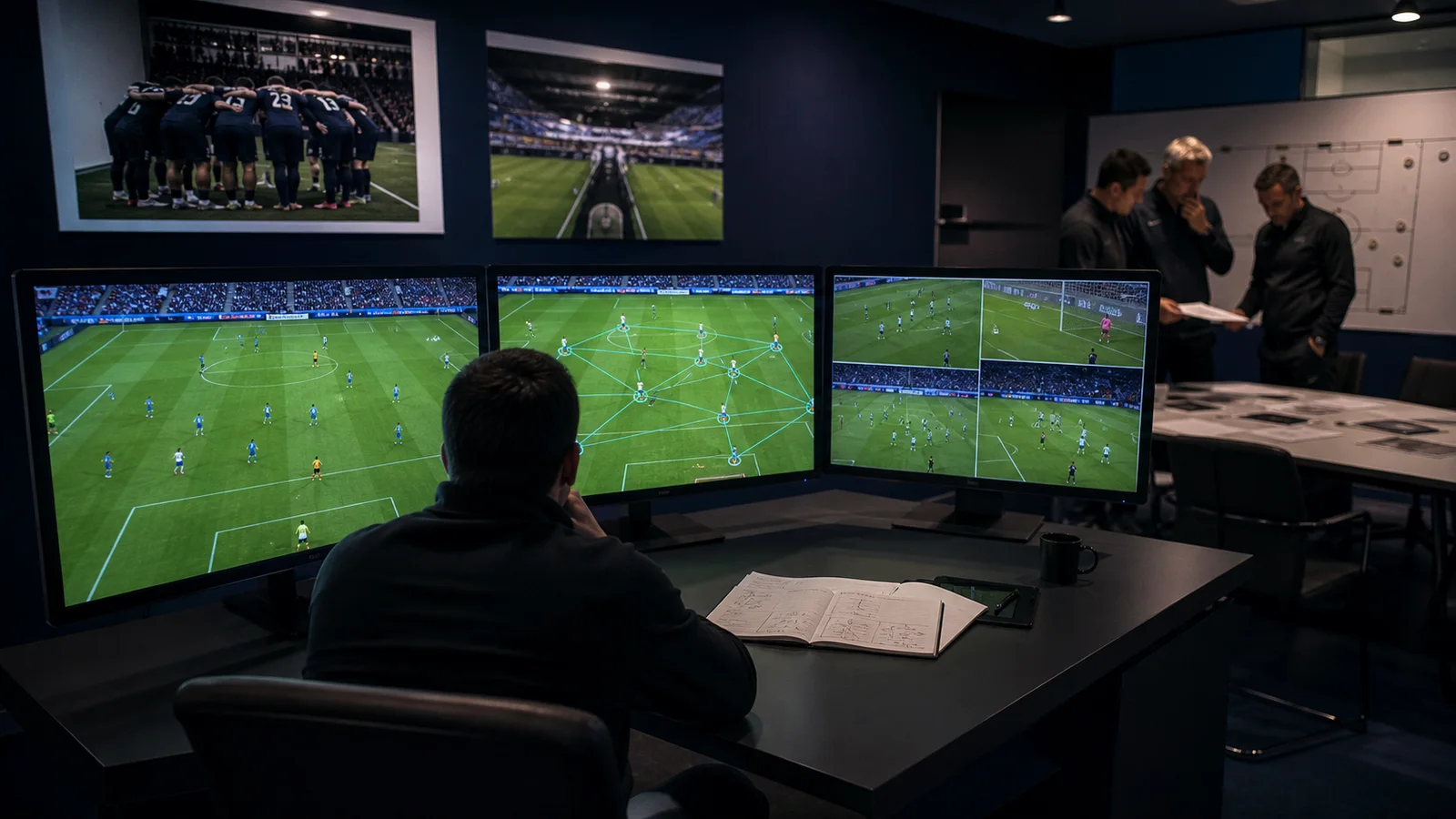
Football AI Pro was a match-analysis assistant developed by FIFA and Lenovo for the 48 teams at the 2026 World Cup. It helped analysts and coaching staff turn official event, tracking and video data into structured tactical reports.
It was not an AI coach making substitutions from the touchline. FIFA says the system was designed for pre-match and post-match analysis and could not be used for live match evaluation.
The system began with structured football data
Its data layer organised events and player tracking into football categories such as build-up, progression, pressing and transitions. That structure gave the system more specific material than a general chatbot searching the open internet.
FIFA says the tool could draw on video and other sources when required. It combined those inputs with a specialised Football Language model developed for tactical analysis.
Users could ask for a football question, not just a spreadsheet
The knowledge-retrieval layer could locate match situations and statistical patterns connected to an analyst's request. The output could include text, graphs, video, pass networks and three-dimensional recreations.
FIFA gives distribution analysis as one example, separating passes, crosses and progressive carries. The depth of the explanation could be adapted for the person using it rather than forcing every coach to read the same generic report.
It was designed to widen access to analysis
Large national teams can bring extensive performance departments and specialised software to a tournament. Smaller programmes may have fewer people available to process the same volume of tracking and video data.
Providing the tool to all 48 teams aimed to narrow that resource gap. Equal access to the platform did not make every team's analysts, tactics or decisions equal, but it gave each staff the same starting capability.
Grounded does not mean infallible
FIFA says each insight was designed to be traceable to underlying data and that retrieval took place before the system generated conclusions. Testing included historical analysis, simulated cases, consistency checks and expert feedback.
Those safeguards address a common generative-AI risk, but they do not turn the output into unquestionable truth. Tracking errors, ambiguous events and tactical interpretation can still require a human analyst to review the evidence.
The final decision remained human
FIFA explicitly says Football AI Pro did not replace analysts. Its purpose was to accelerate data interpretation, organise evidence and produce a useful first report.
A coach still had to decide whether an observed pattern mattered, whether the opponent might change and how a recommendation fit the players available. The technology reduced searching and formatting work; responsibility for football decisions stayed with people.
Sources and further reading
This article was written for Curiosity Desk. We do not copy other publishers or invent quotes. If a material error is found, we correct it openly.
Read the full standards →One answer should lead to a better question
Bring your curiosity to the group
Curious Minds is our public Facebook community for surprising science, strange history, Australian wildlife and everyday questions. No copied posts, no personal-friend invitations and no link dumping.
- Three self-contained discussion prompts each week
- Sourced answers and honest uncertainty
- Respectful conversation without spam