The milestone in one sentence
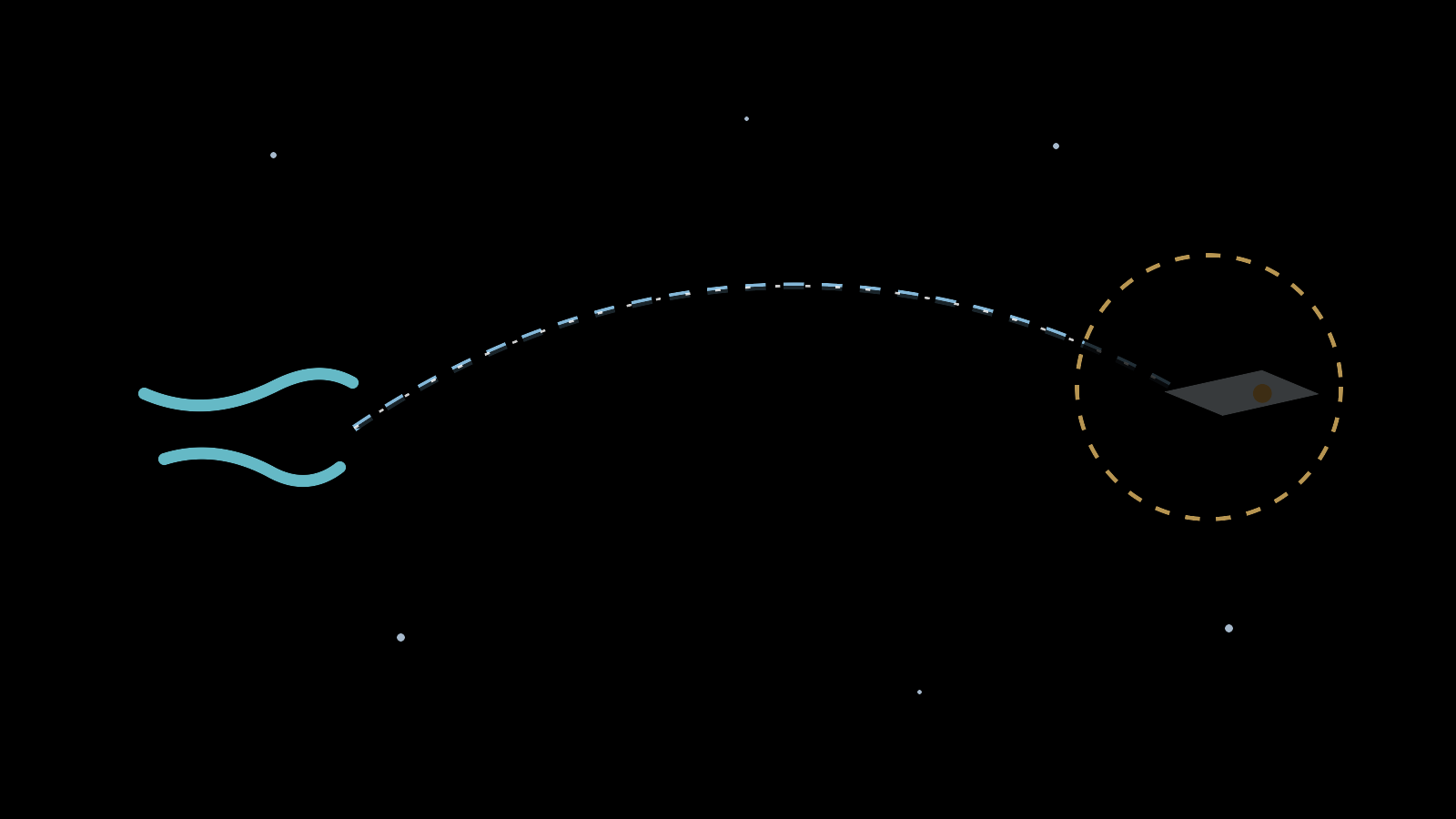
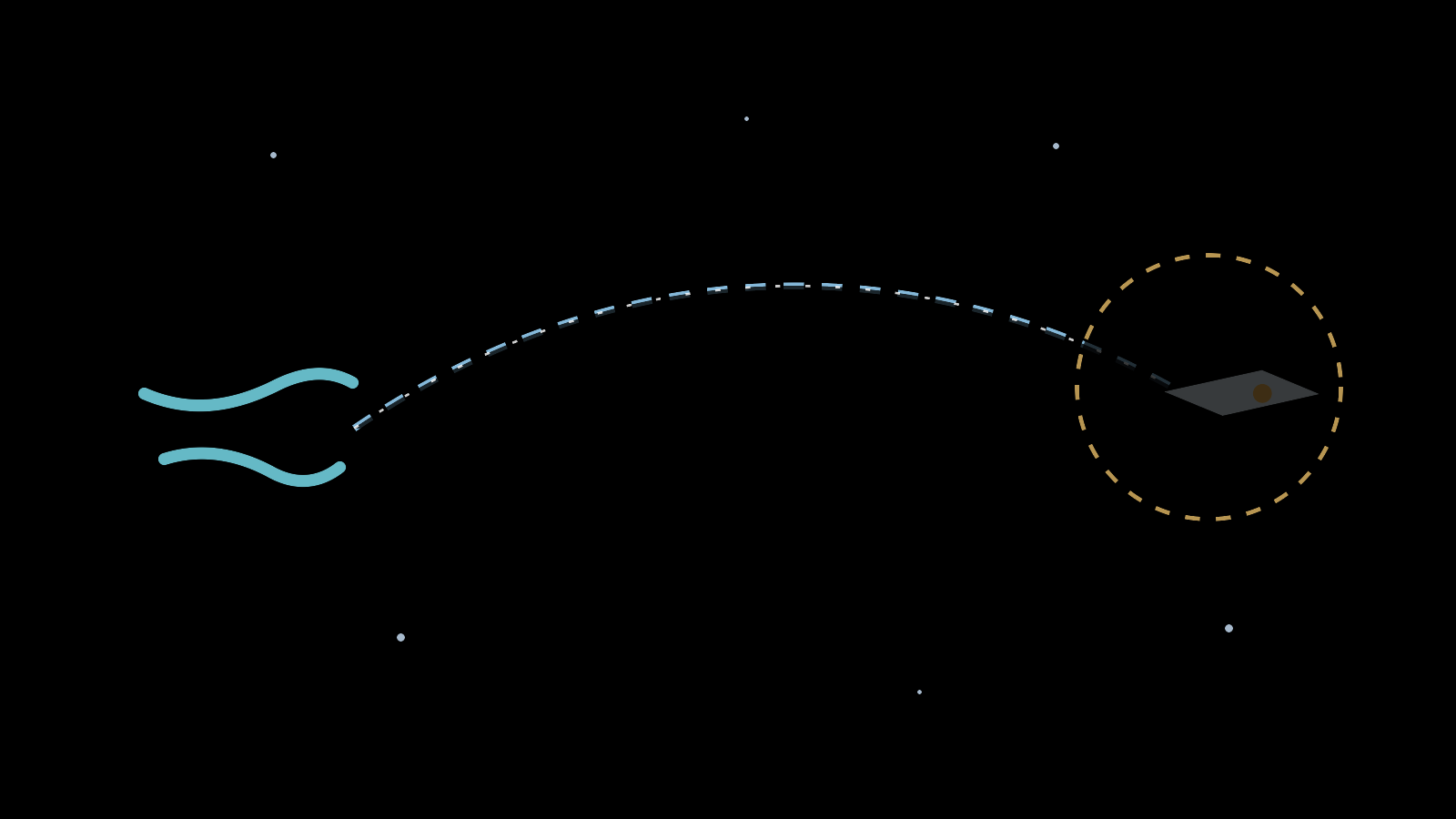
Voyager 1 is due to reach a distance of one light-day from Earth on November 18, 2026, according to NASA. That means the spacecraft will be about as far away as light travels in 24 hours—not that it has reached a final edge of the Solar System.
The useful question is what the distance changes for us: it makes the delay in radio communication easier to picture, while NASA's power-saving decisions show how a spacecraft can remain in contact as its science capability narrows.
What a light-day actually measures
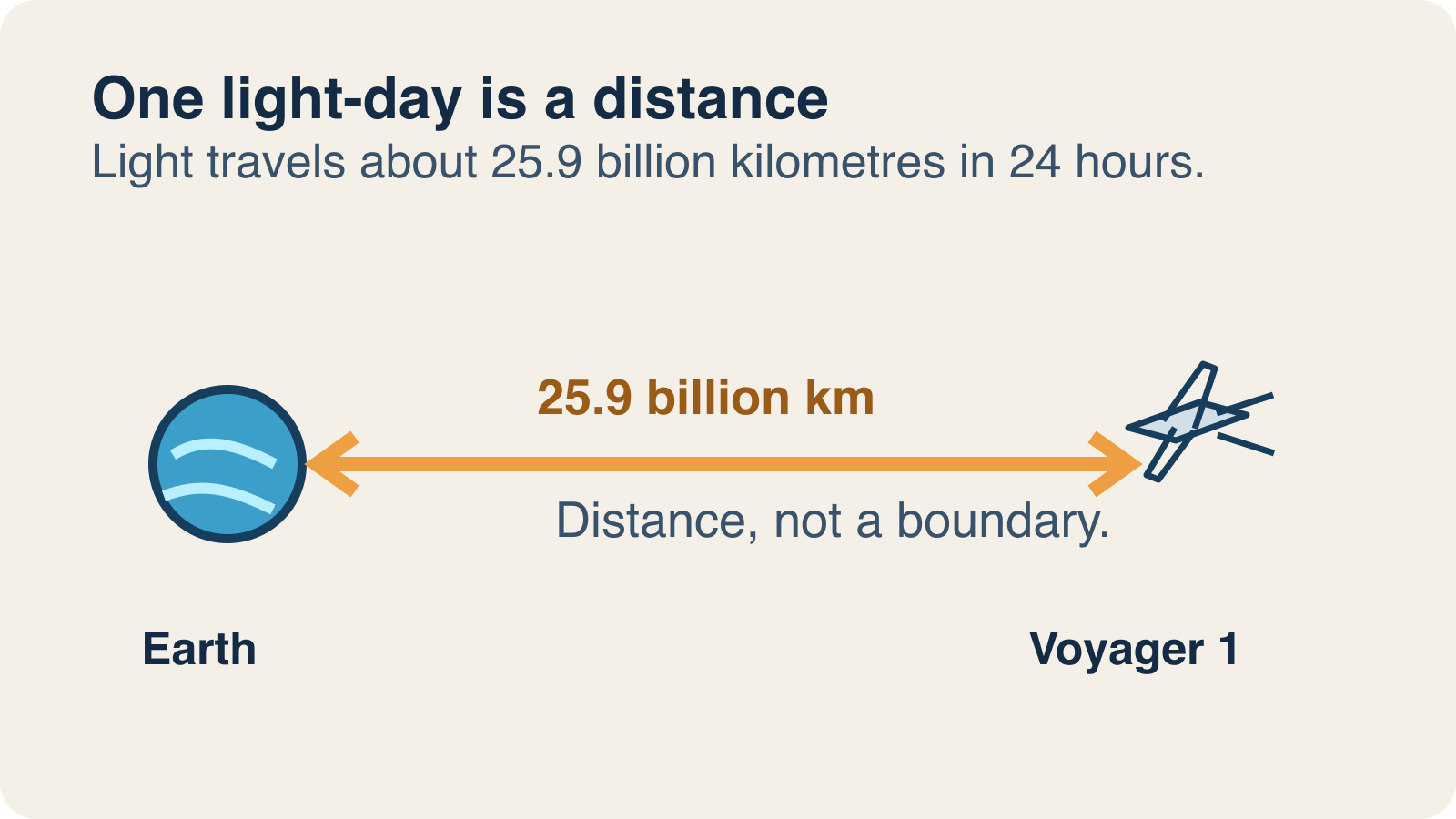
A light-day is a distance, not a duration. It is the distance light covers in one day, about 25.9 billion kilometres. NASA's Voyager tracker uses that unit to make an enormous spacecraft distance easier to compare with a familiar clock.
At the milestone, a radio instruction sent from Earth would still need roughly a day to reach Voyager 1, and a reply would take roughly another day to return. The exact round trip depends on the changing distance, so the diagram is a clear scale explanation rather than a live communications readout.
Thinking in light-time also keeps the headline from sliding into a different claim. The unit describes the separation between Earth and the spacecraft at a particular point in the mission; it does not name a region around the Sun. The same separation can be described in kilometres, astronomical units or the travel time of a radio signal. Because Earth and Voyager 1 both keep moving, NASA's November date is a forecasted crossing of that distance, not a permanent boundary or a measurement that stops changing.
Why a distance milestone also means a signal delay
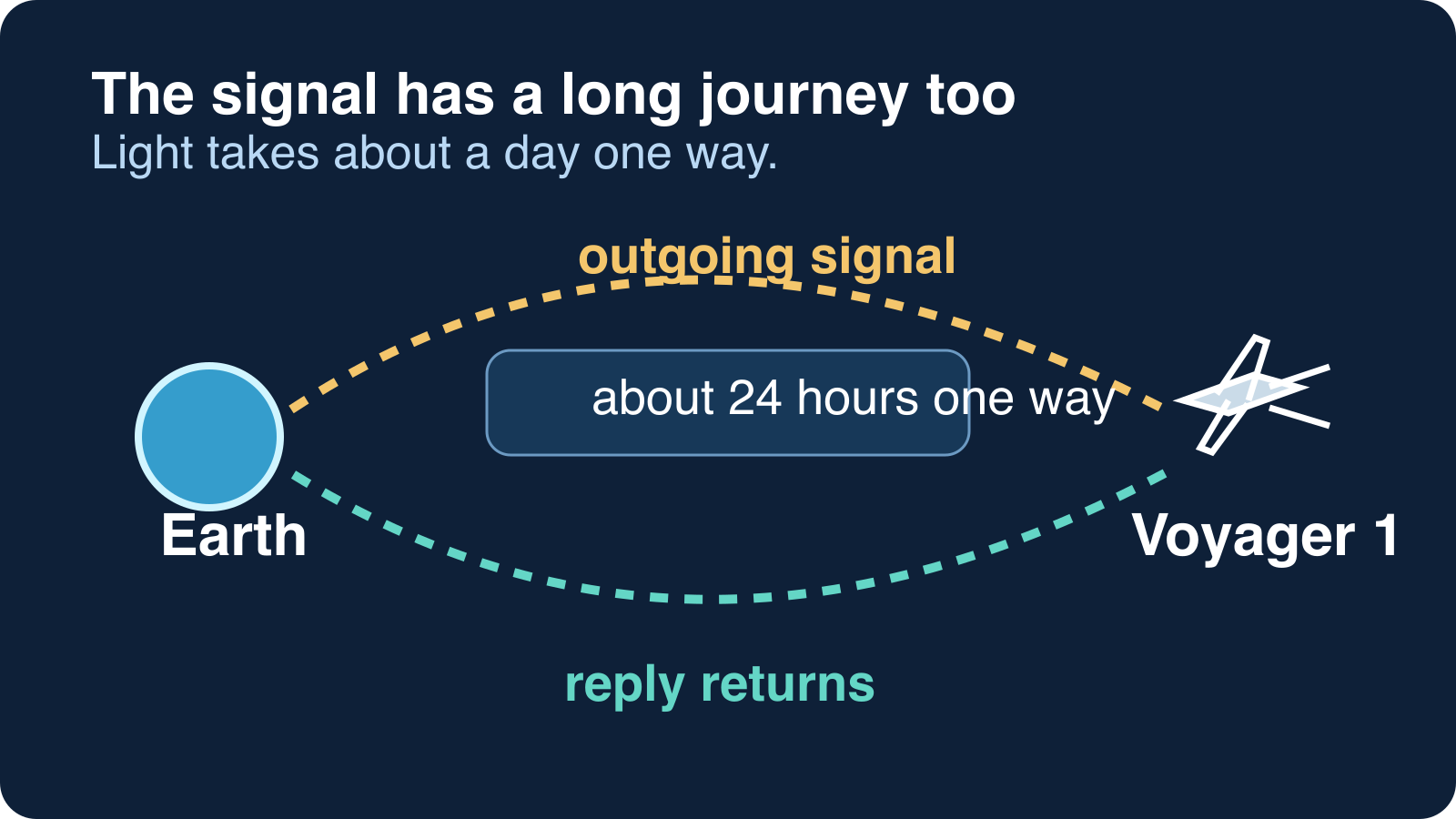
Voyager 1 is not being watched like a nearby satellite. Every command and measurement is part of a conversation across an expanding light-time gap. A one-light-day distance therefore turns an abstract number into an operational fact: the ground team cannot respond instantly to what the spacecraft is doing.
That delay does not mean the spacecraft stops communicating. It means mission planning must account for time, and it is why a reported pause or instrument change must be described carefully rather than treated as a real-time emergency.
The delay also changes the rhythm of operations. A team can send a command, wait for it to travel, and then wait again for the spacecraft's response before knowing how the instruction worked. The delay is a consequence of the distance, not evidence that the radio link has failed. It is also why a future status update must be dated: a report received on Earth describes an earlier spacecraft state, and the next decision will be made with that built-in lag.
Why NASA is conserving power
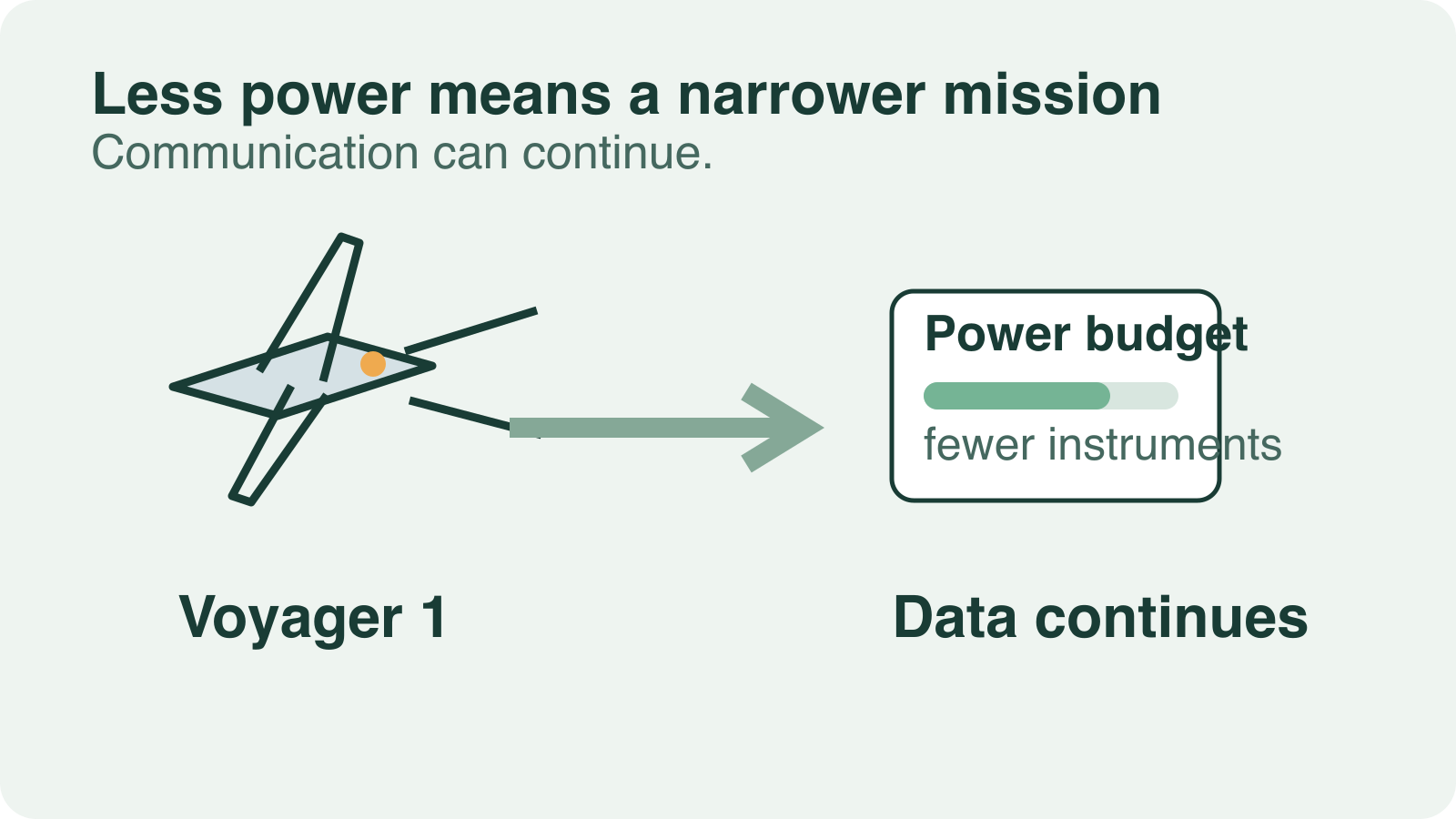
Voyager 1's radioisotope power system produces less usable electricity as its radioactive fuel decays. NASA and JPL have been switching off or reducing instruments to keep the spacecraft operating for longer. The important distinction is between fewer science measurements and no spacecraft at all.
The one-light-day milestone is about where Voyager 1 is. Power conservation is about how much of the mission can continue there. One does not prove the other, and neither tells us that Voyager 1 has crossed a single agreed boundary called the edge of space.
NASA's stated date, November 18, is the next useful checkpoint. When it arrives, the durable fact will be the distance marker and its light-time meaning. Any change to instruments, communications or mission plans should be taken from a new NASA update rather than inferred from the milestone itself.
That is the practical payoff of separating the two ideas. The distance milestone gives readers a way to picture the communication gap; the power story explains why the mission may return fewer kinds of measurements over time. Both facts can be true together without implying that the spacecraft has stopped, that every instrument has failed or that a single date settles the larger question of where the Solar System ends.
Sources and further reading
This article was written for Curiosity Desk. We do not copy other publishers or invent quotes. If a material error is found, we correct it openly.
Read the full standards →One answer should lead to a better question
Bring your curiosity to the group
Curious Minds is our public Facebook community for surprising science, strange history, Australian wildlife and everyday questions. No copied posts, no personal-friend invitations and no link dumping.
- Three self-contained discussion prompts each week
- Sourced answers and honest uncertainty
- Respectful conversation without spam